lAZARUS STATION
sOLO pROJECT uNREAL ENGINE 5 BLOCKout
Lazarus station
RESPONSIBILITIES:
Designed layouts of the entire map.
Modeled and built the map in UE5, including small scale props, architecture details and pieces, and tram.
Implemented AI, gameplay, asset packs for gameplay. Designed telekinesis system, objectives and modified enemies for different types and for mini boss/boss.
SOFTWARE USED: UE5, Blueprints, Block mesh, UE5 modeling tool, Illustrator, Splines.
ASSET PACKS USED: Advanced Survival Horror, 4k blood pack, nebula sky box, dying breath death poses. This can all be found on FAB
Design Intentions :
Design a intense an immersive survival horror experience.
Design spaces that utilizes both environmental combat and traditional combat capabilities.
Improve scripting skills by modifying existing scripts to work with new ones and creating new scripts.
Build a complete level with a start, middle, and end.
Create combat encounters that provide room for different approaches to use the weapons and tools the player is provided with.
Full Walkthrough
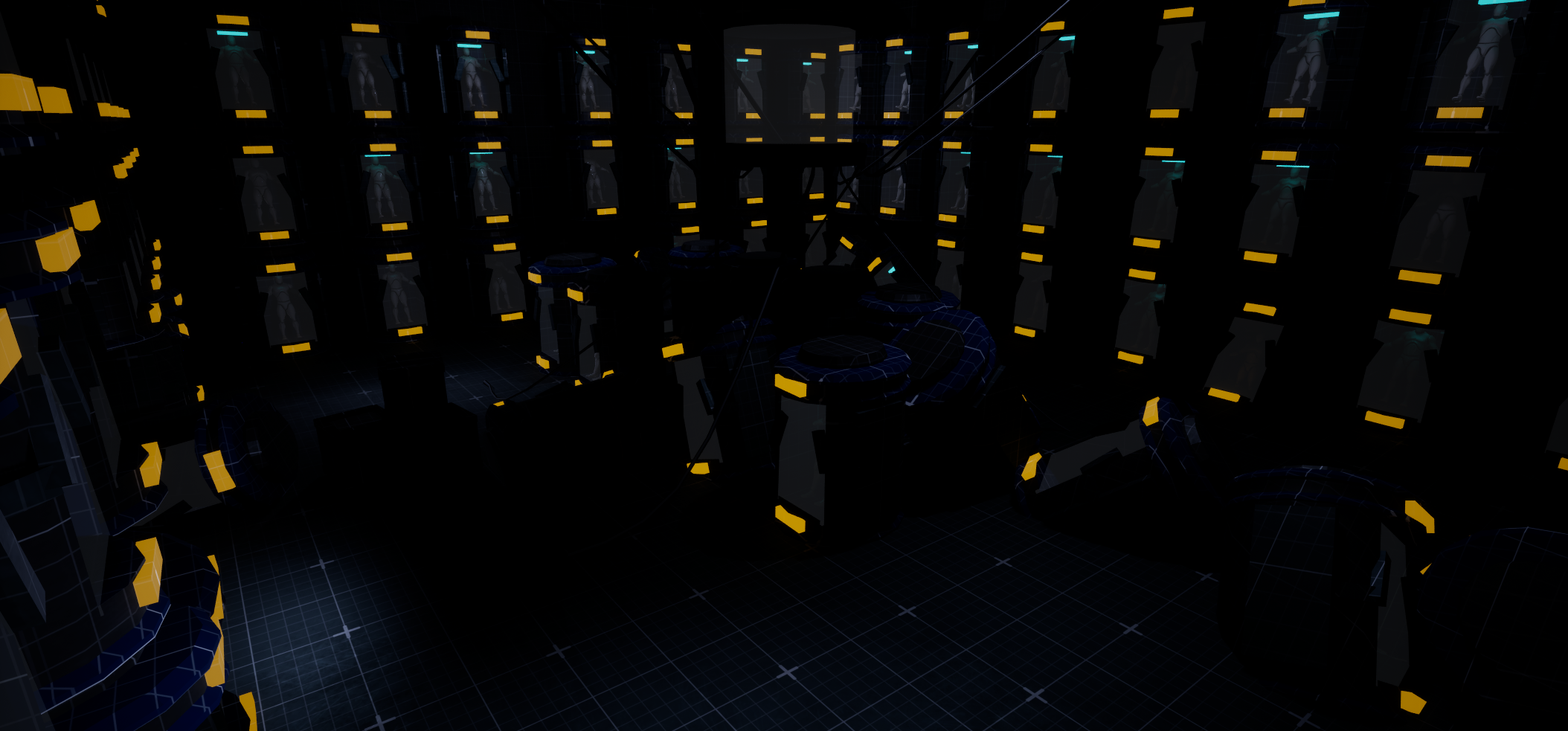
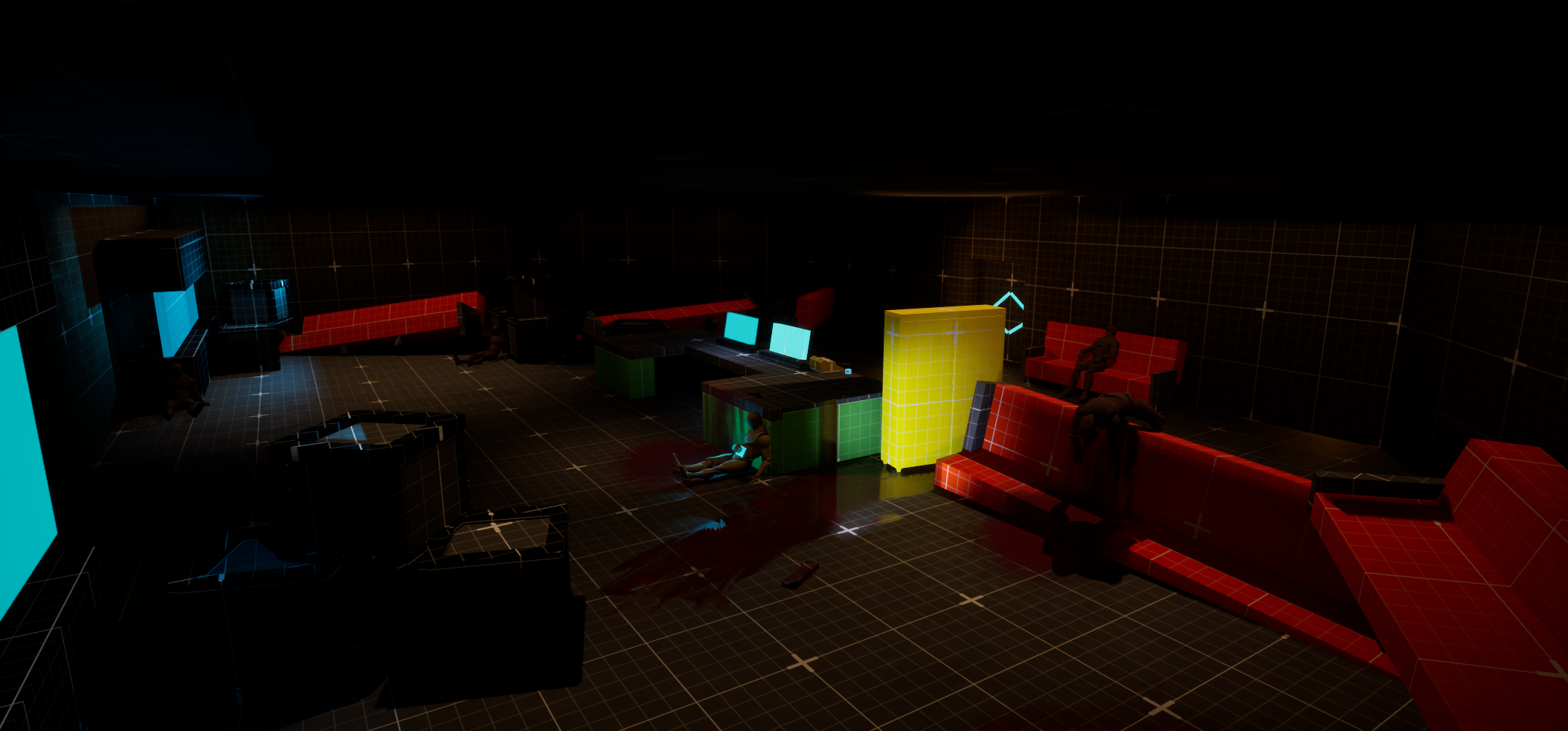
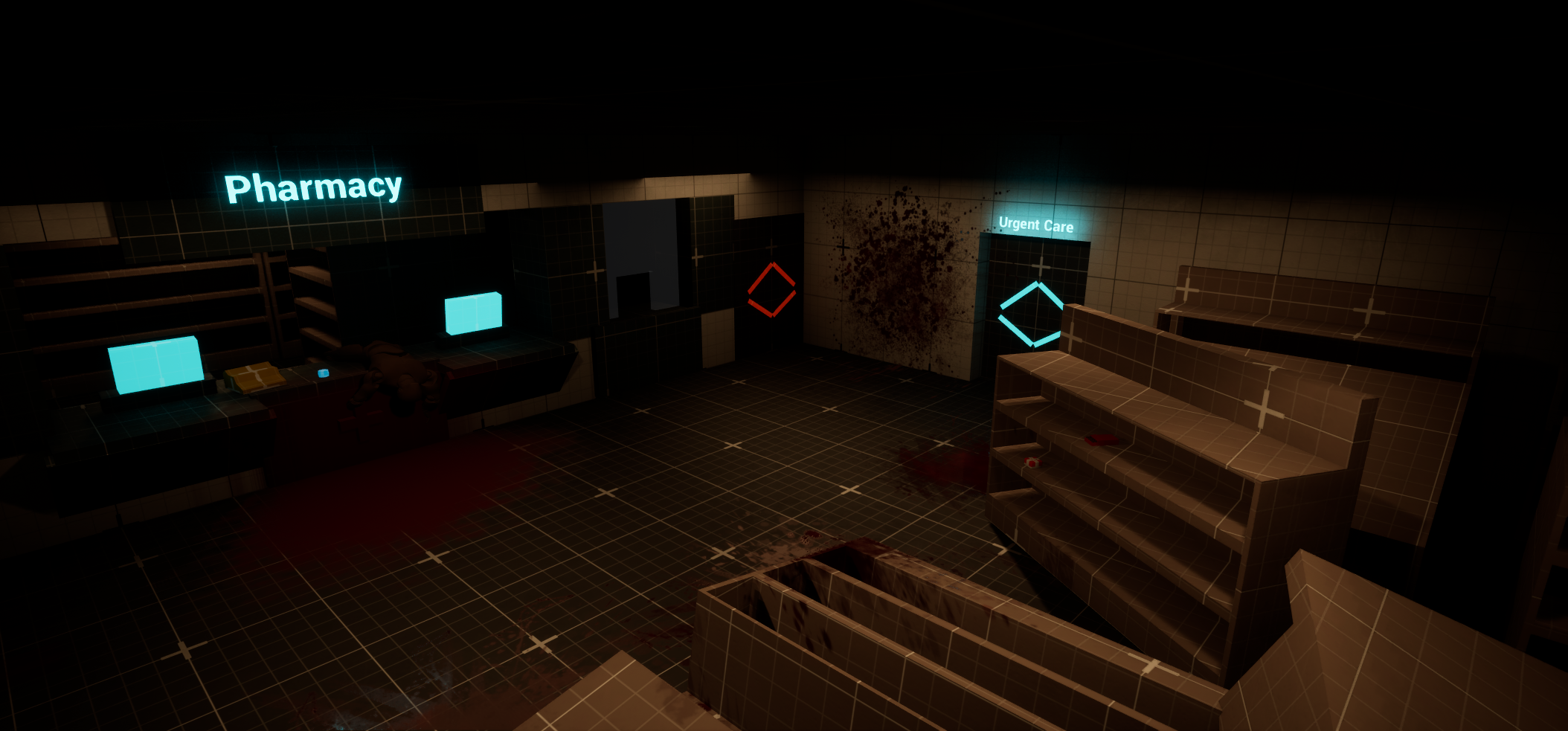
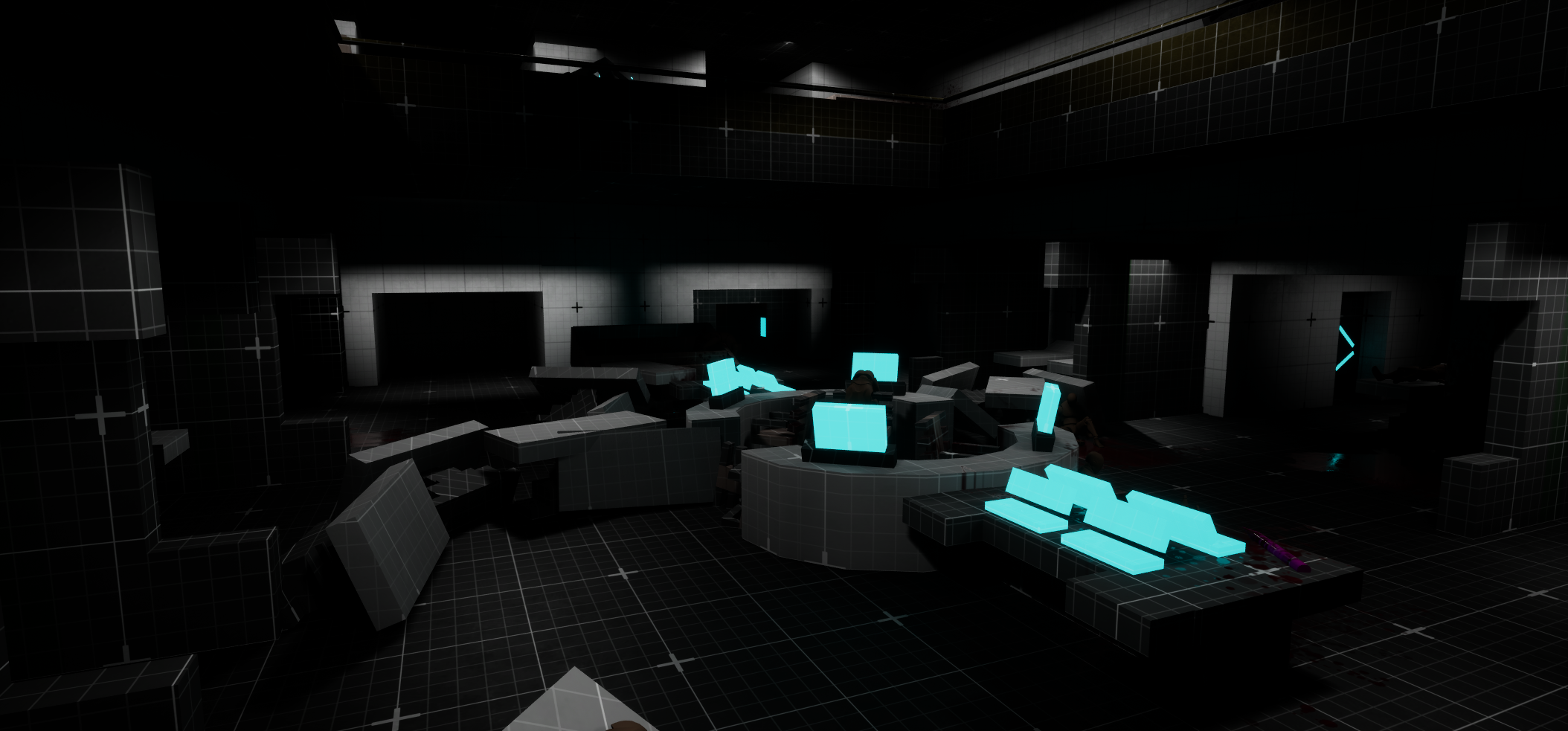
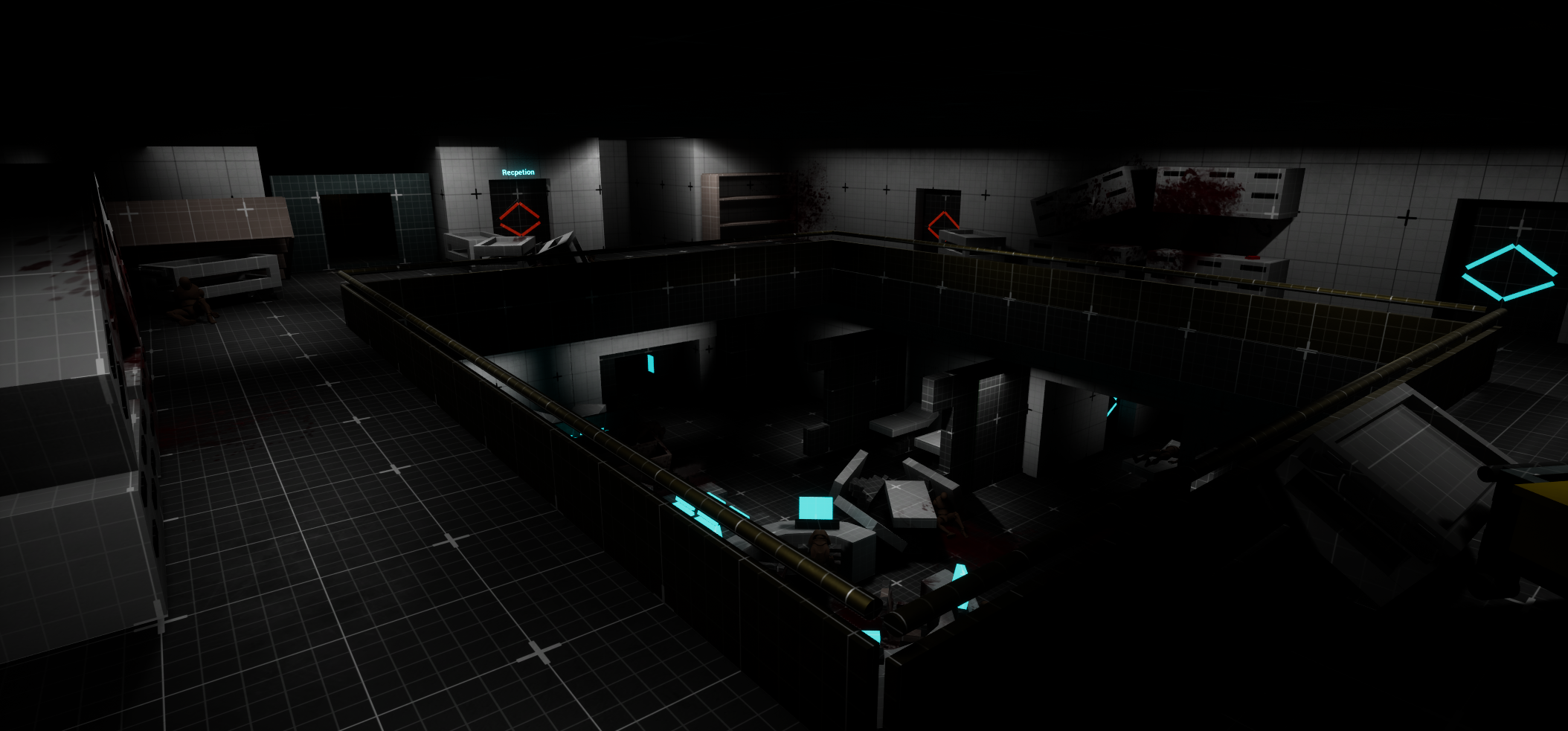
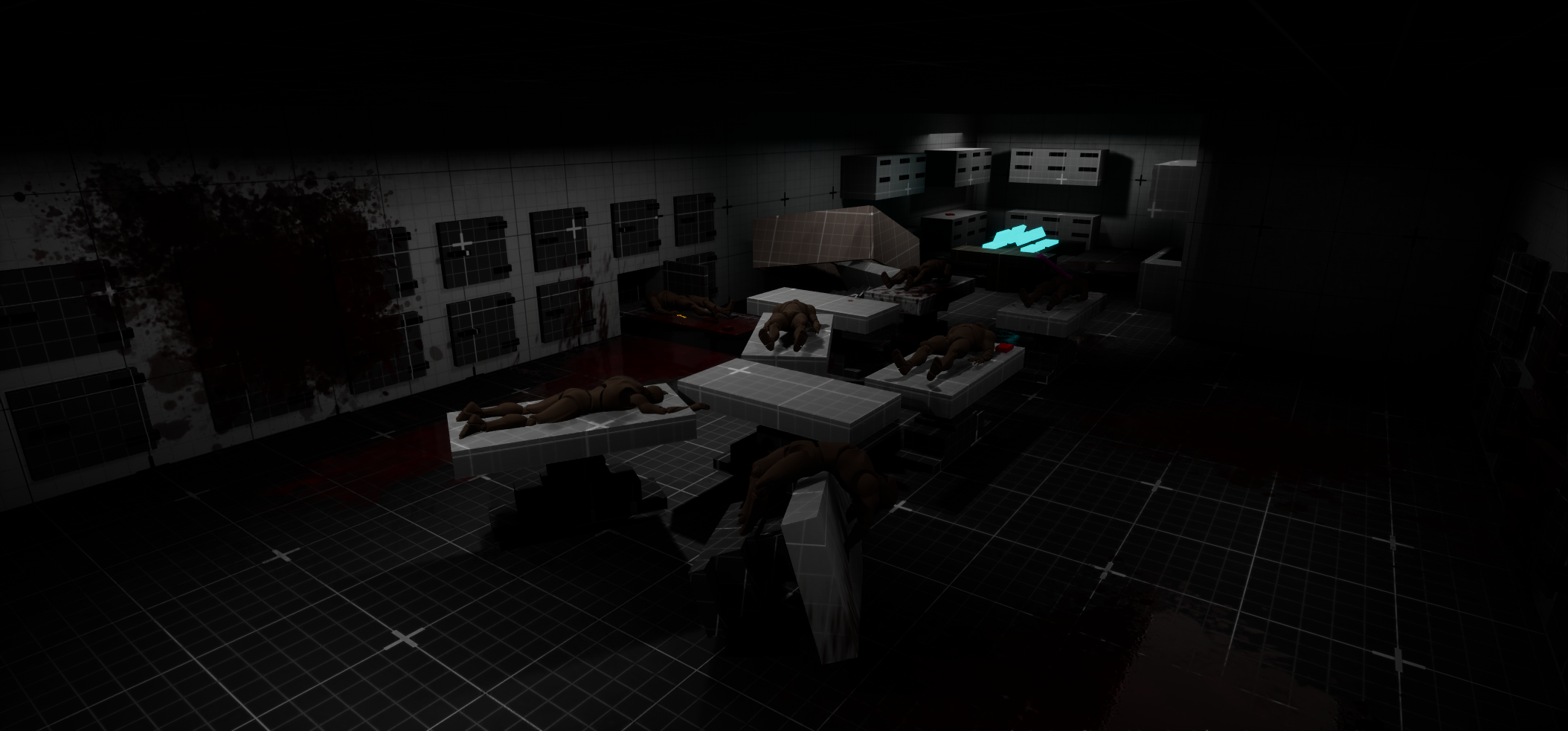
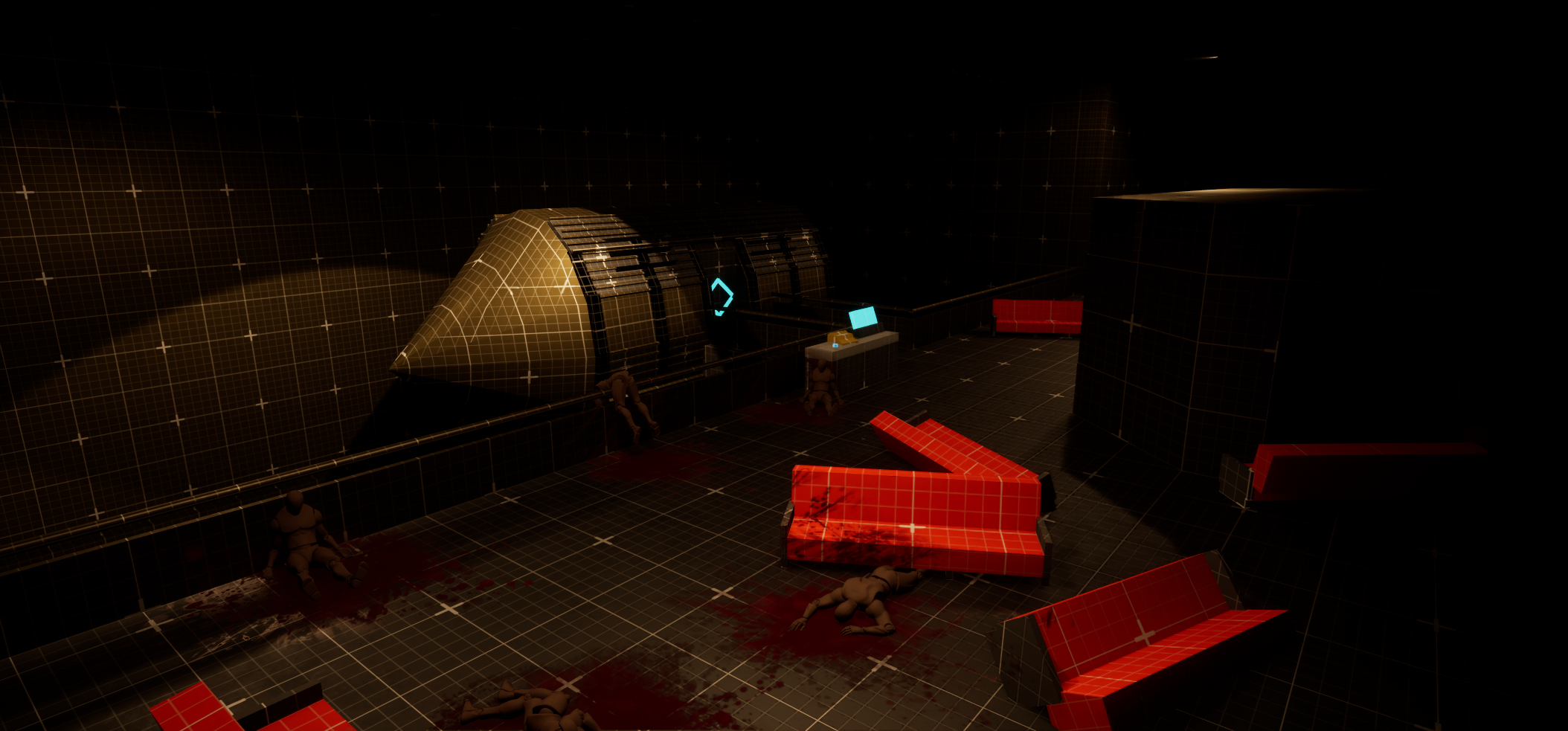
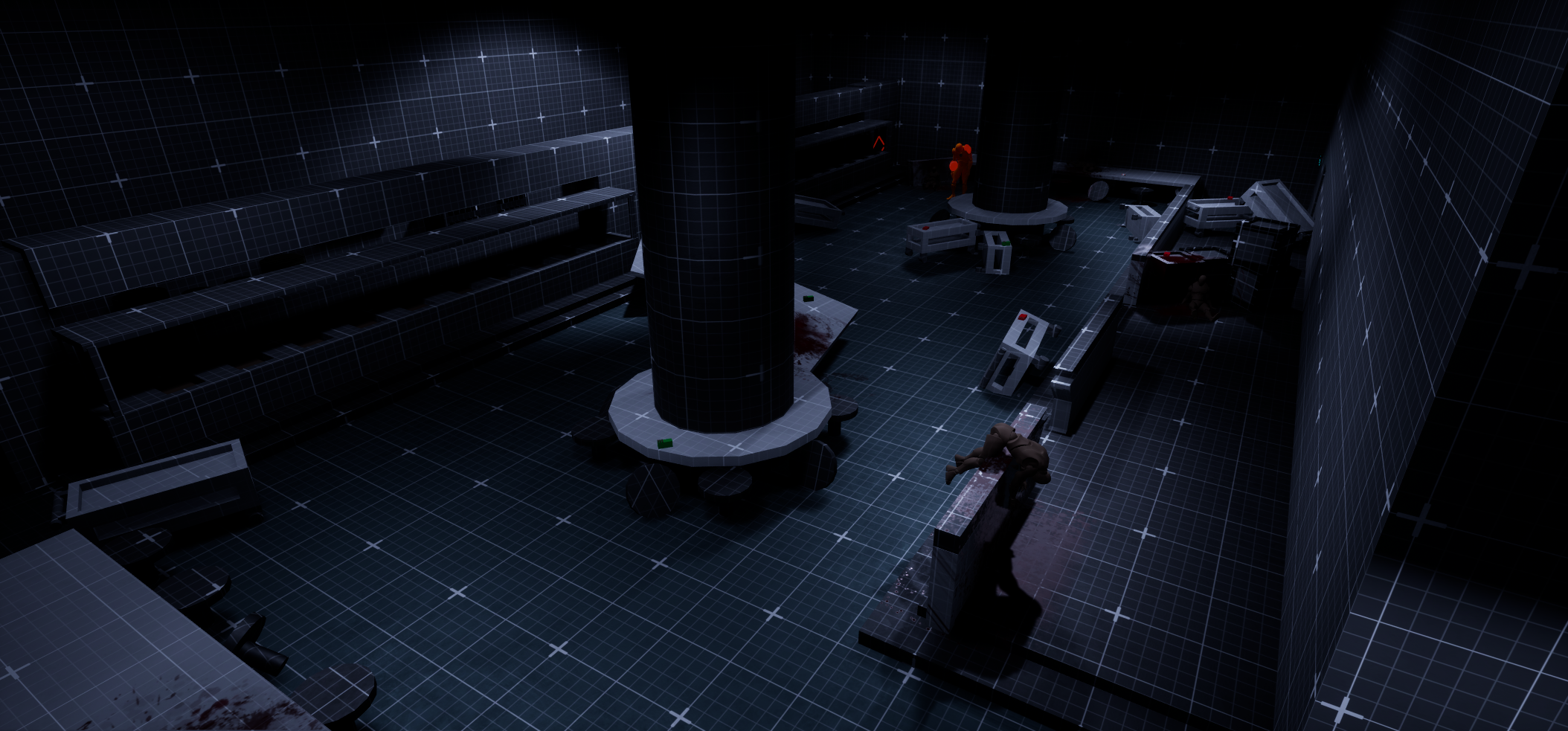
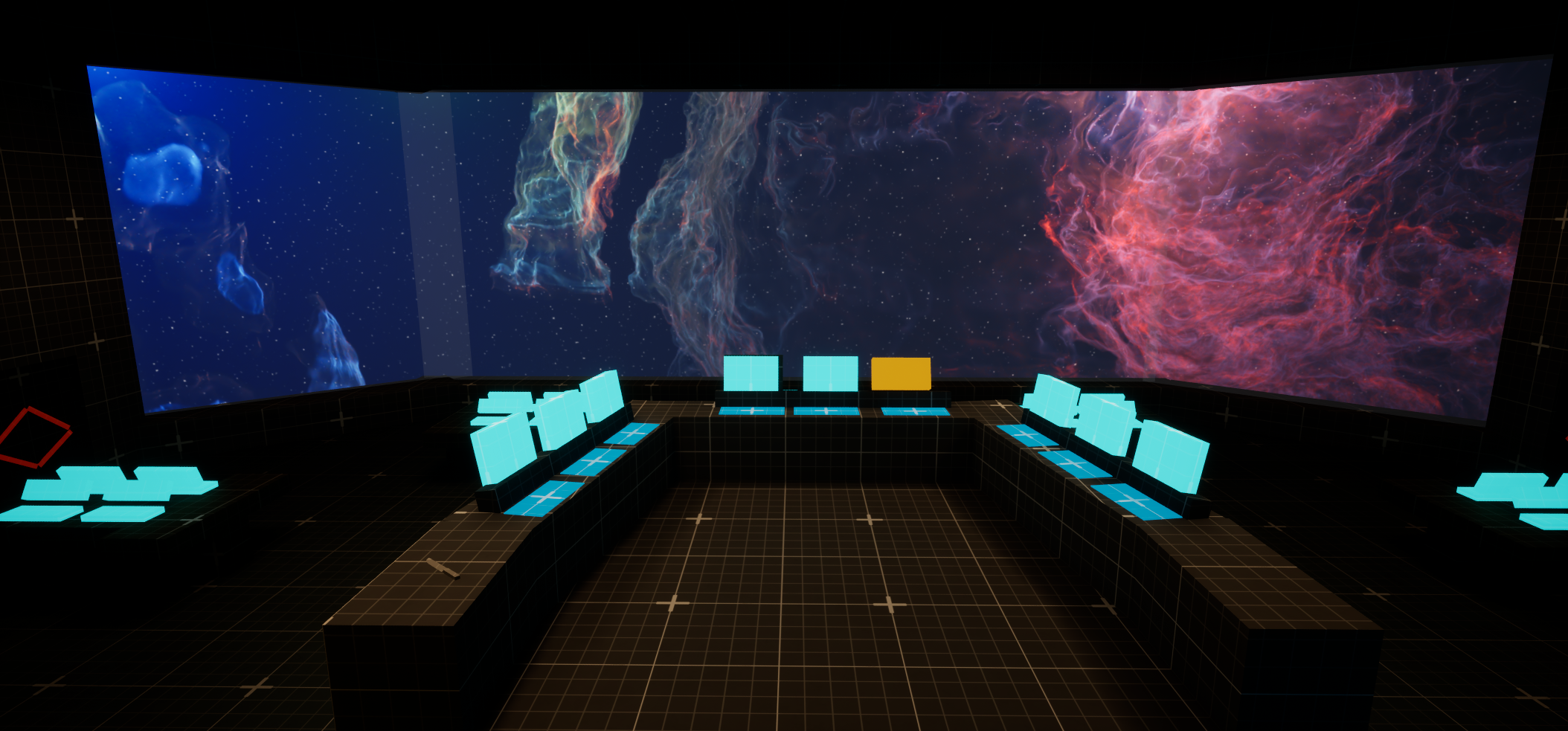
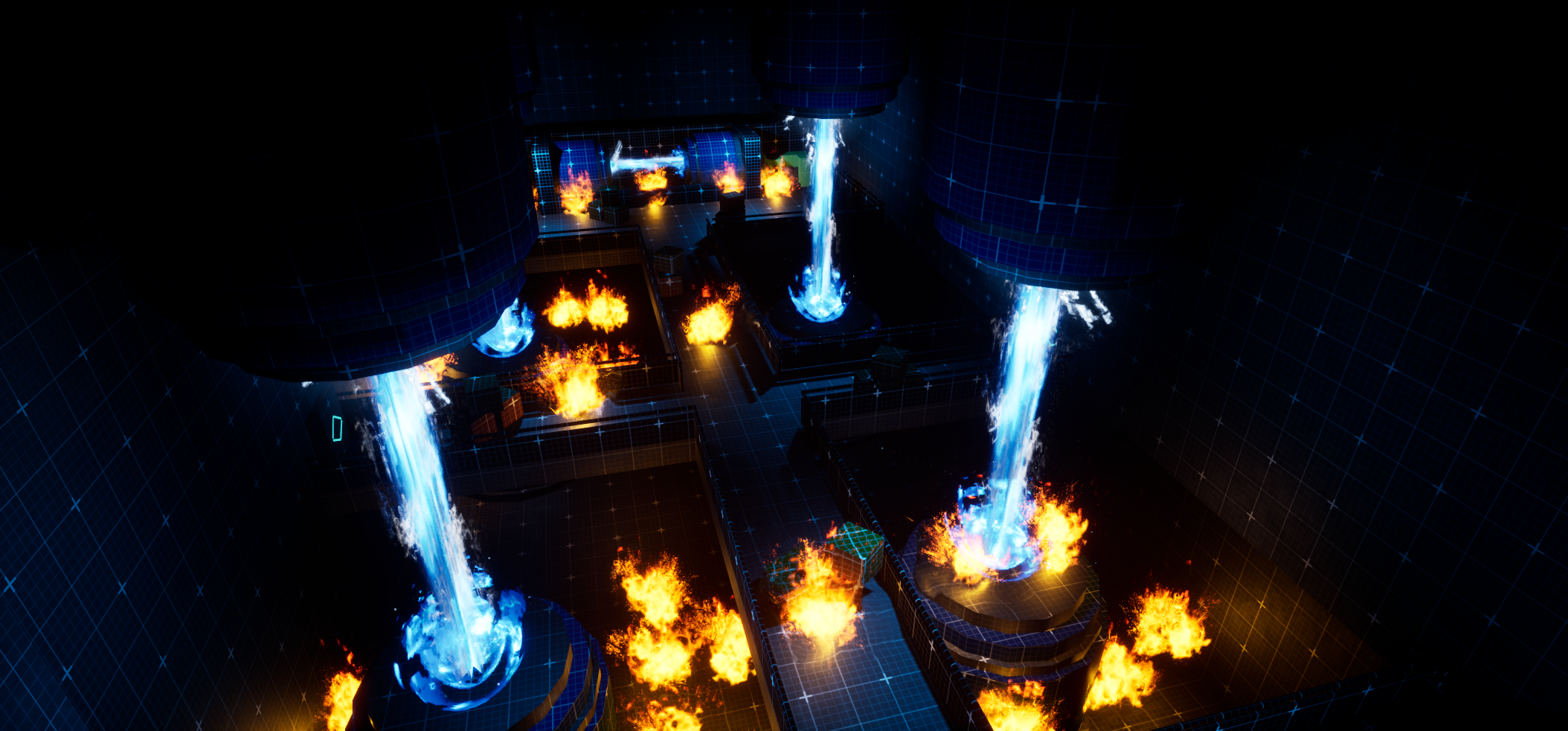
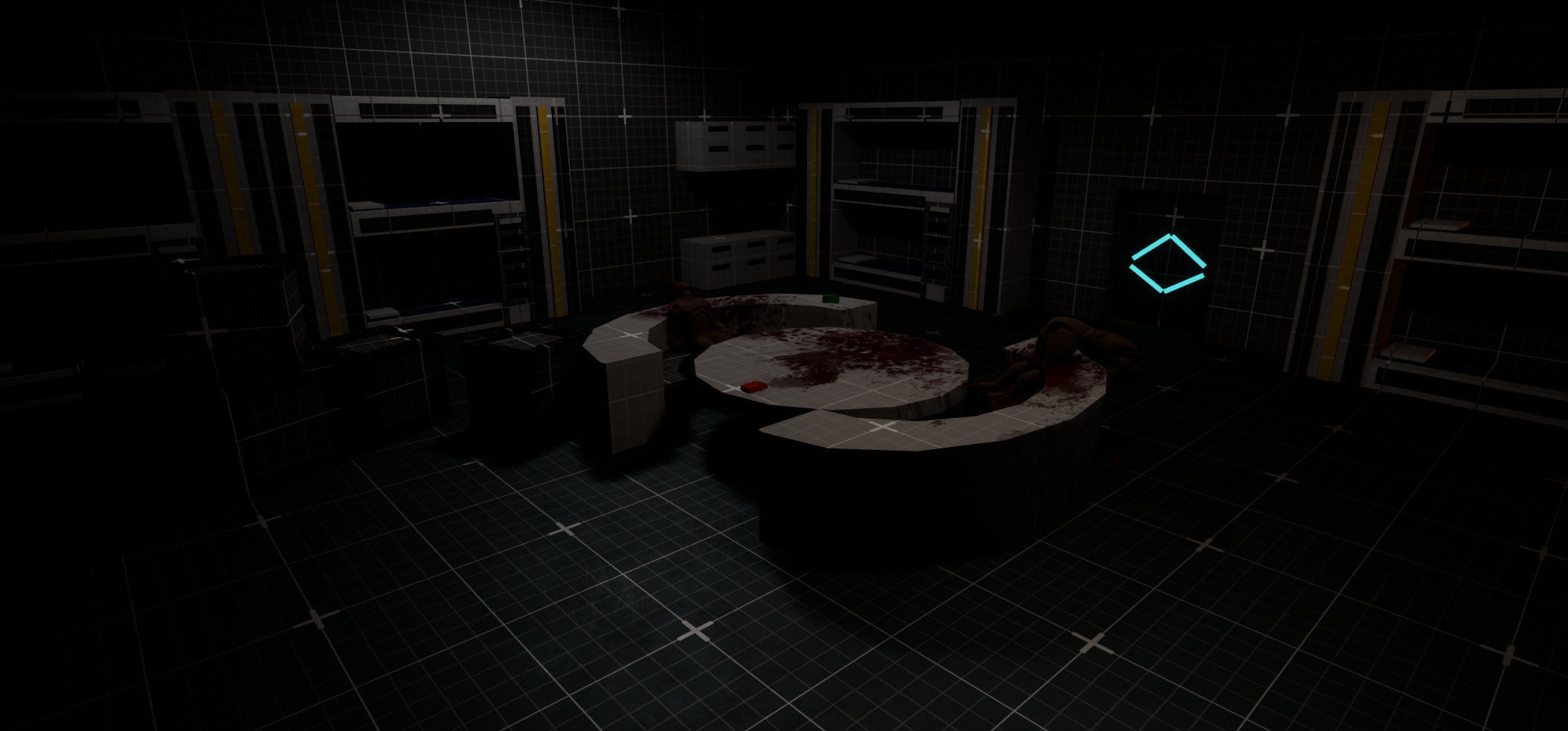
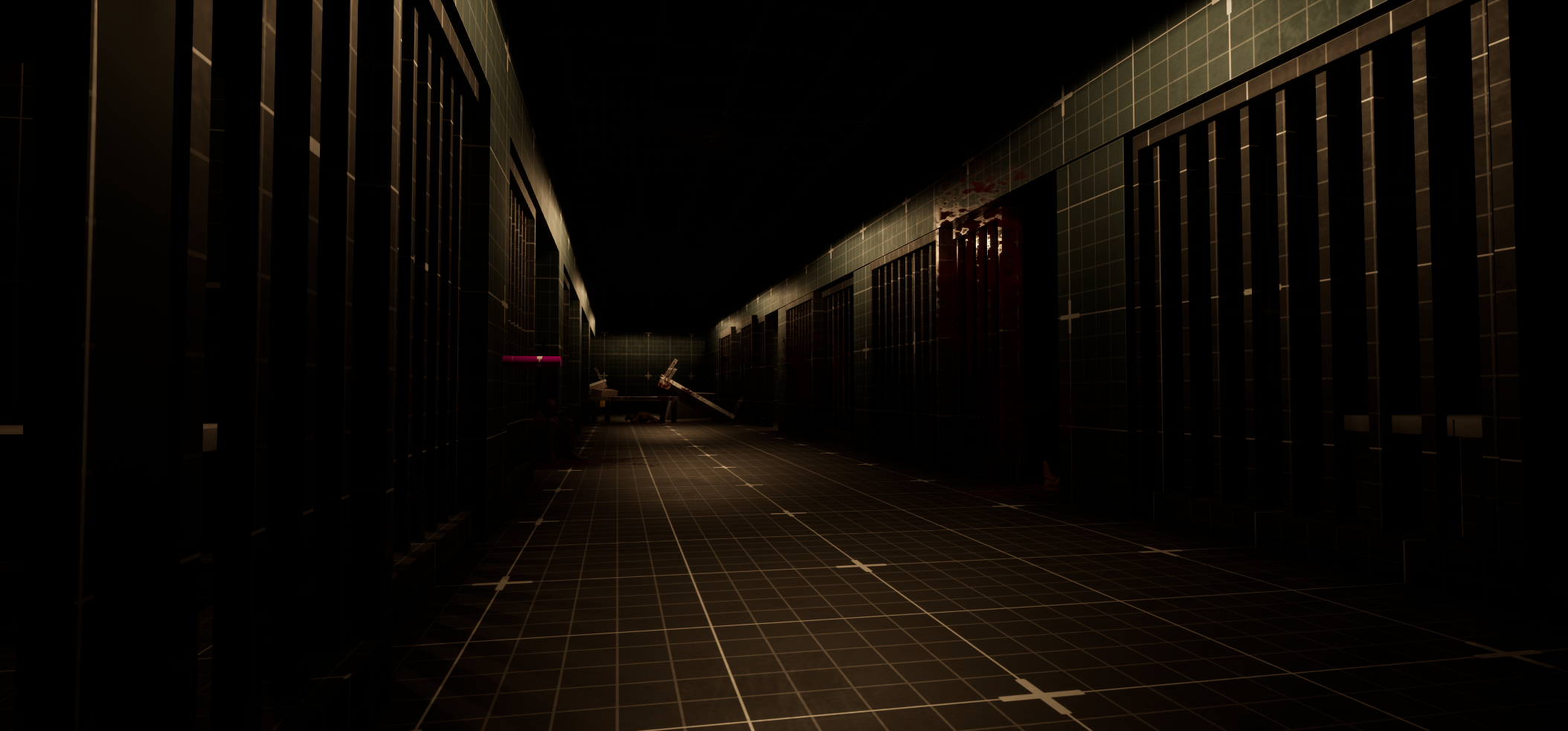
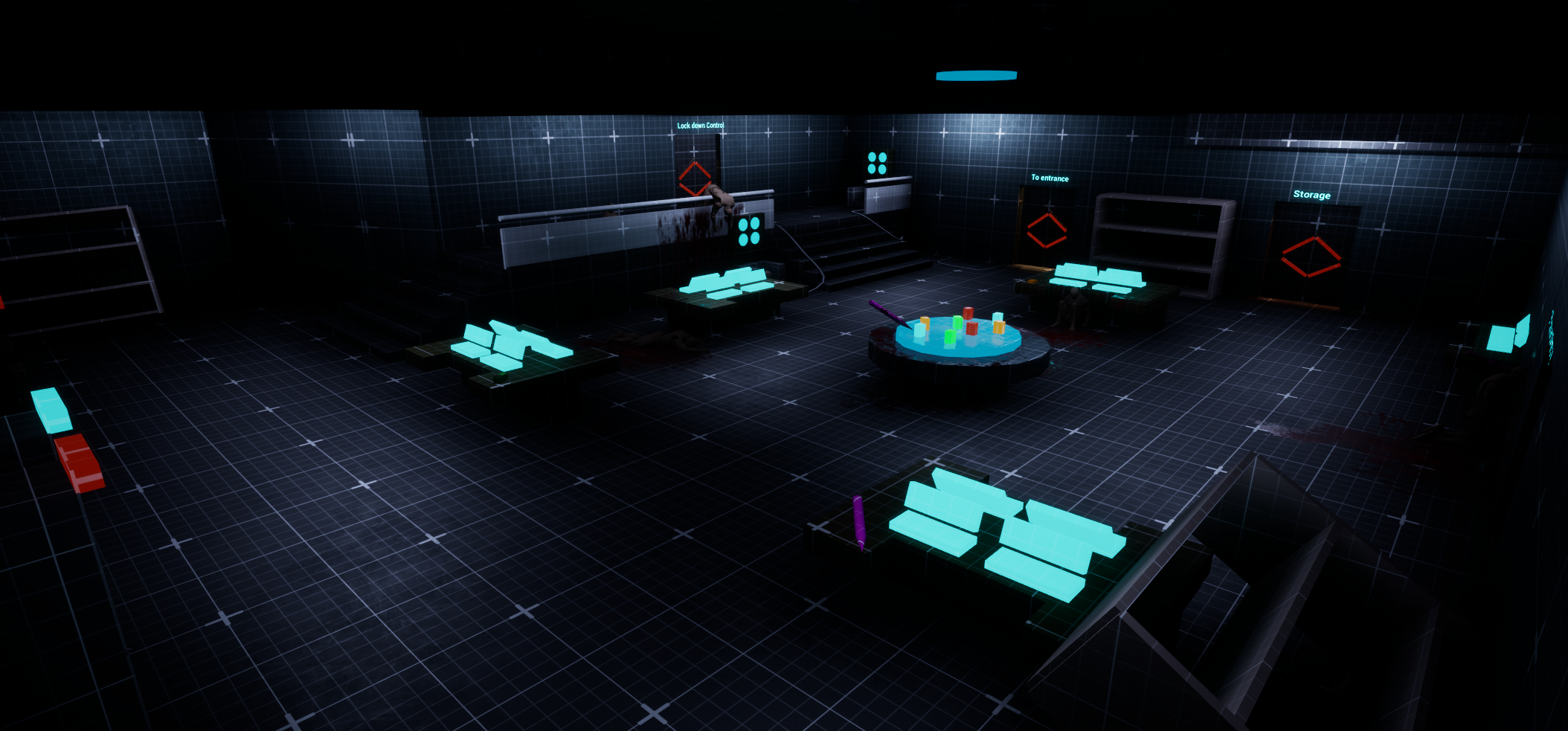
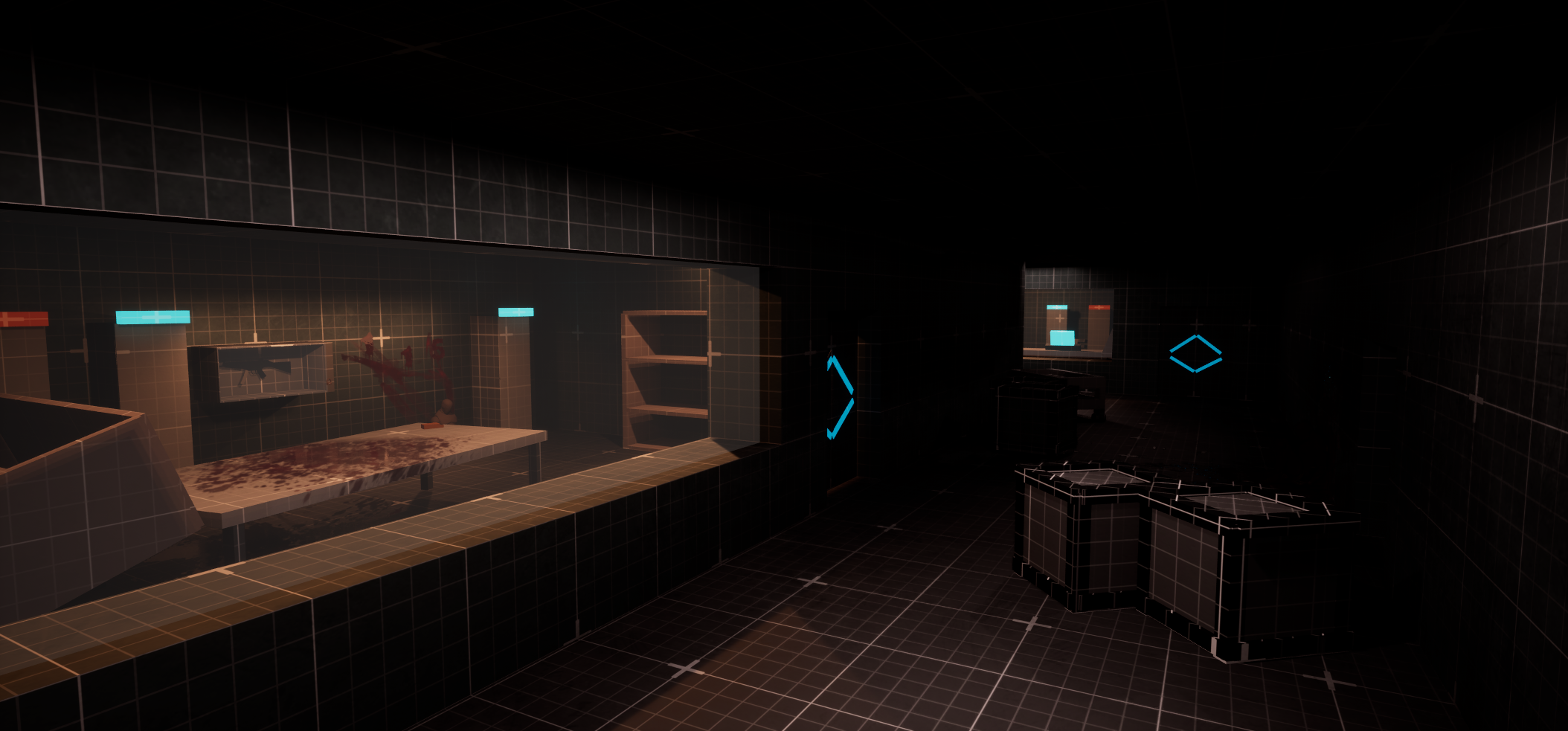
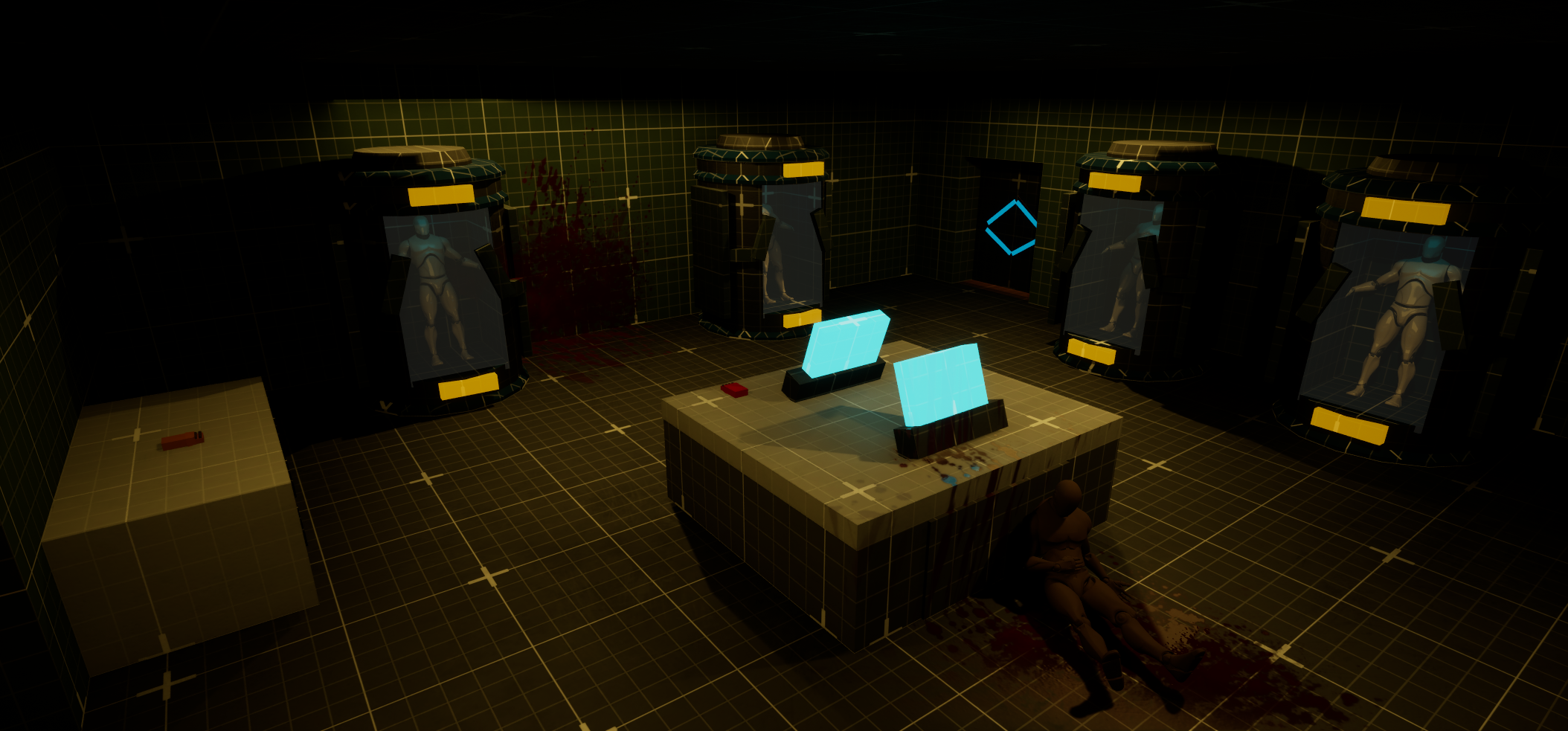
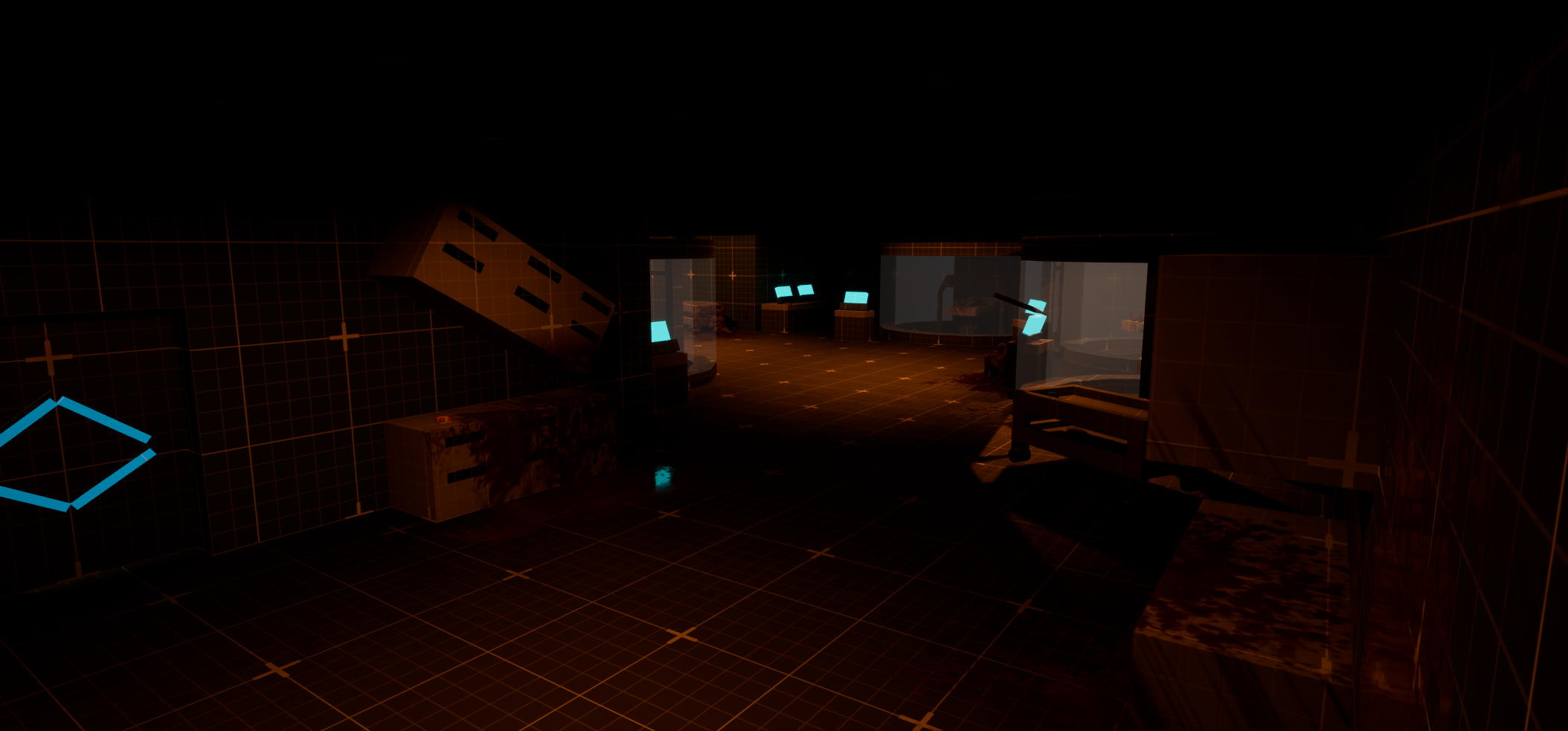
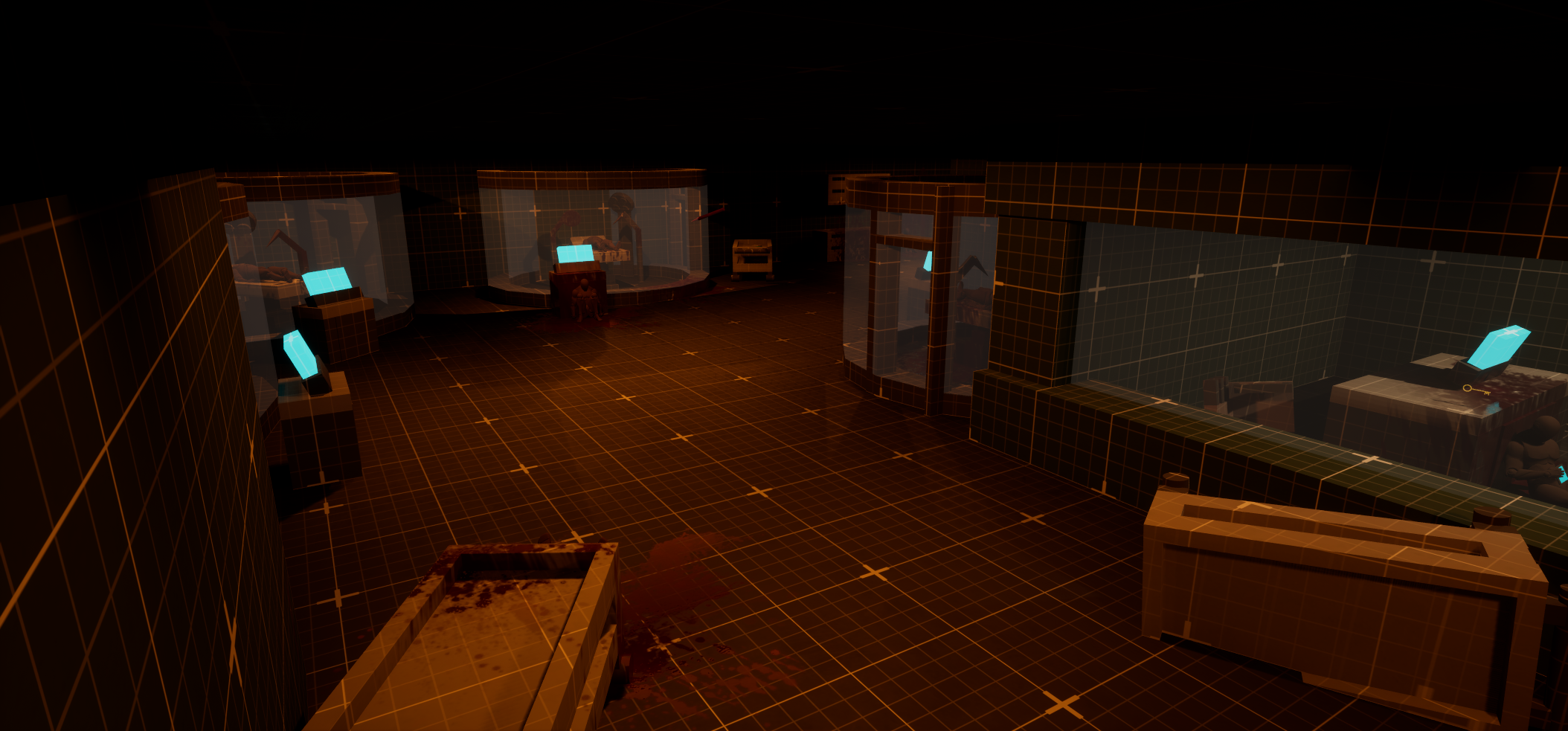
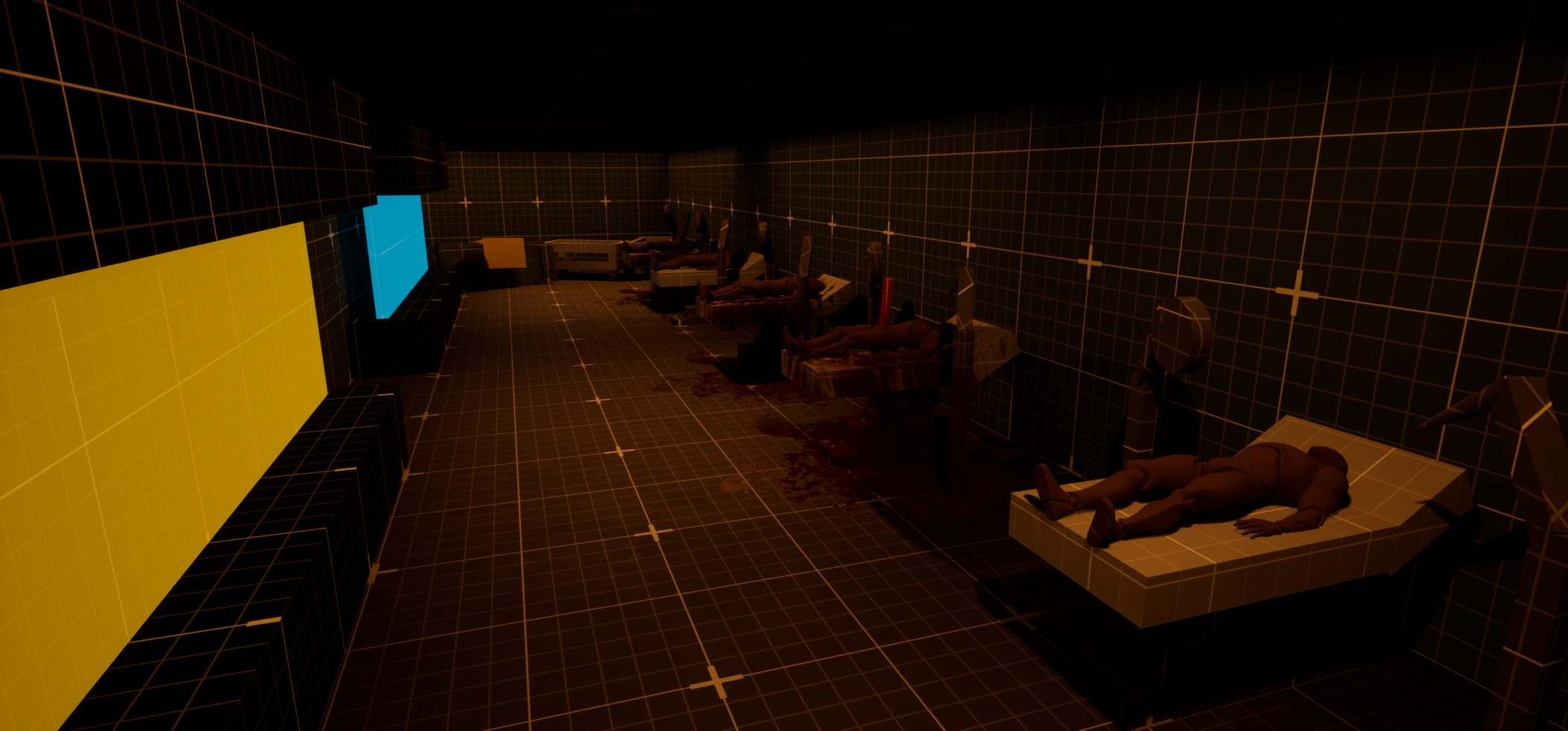
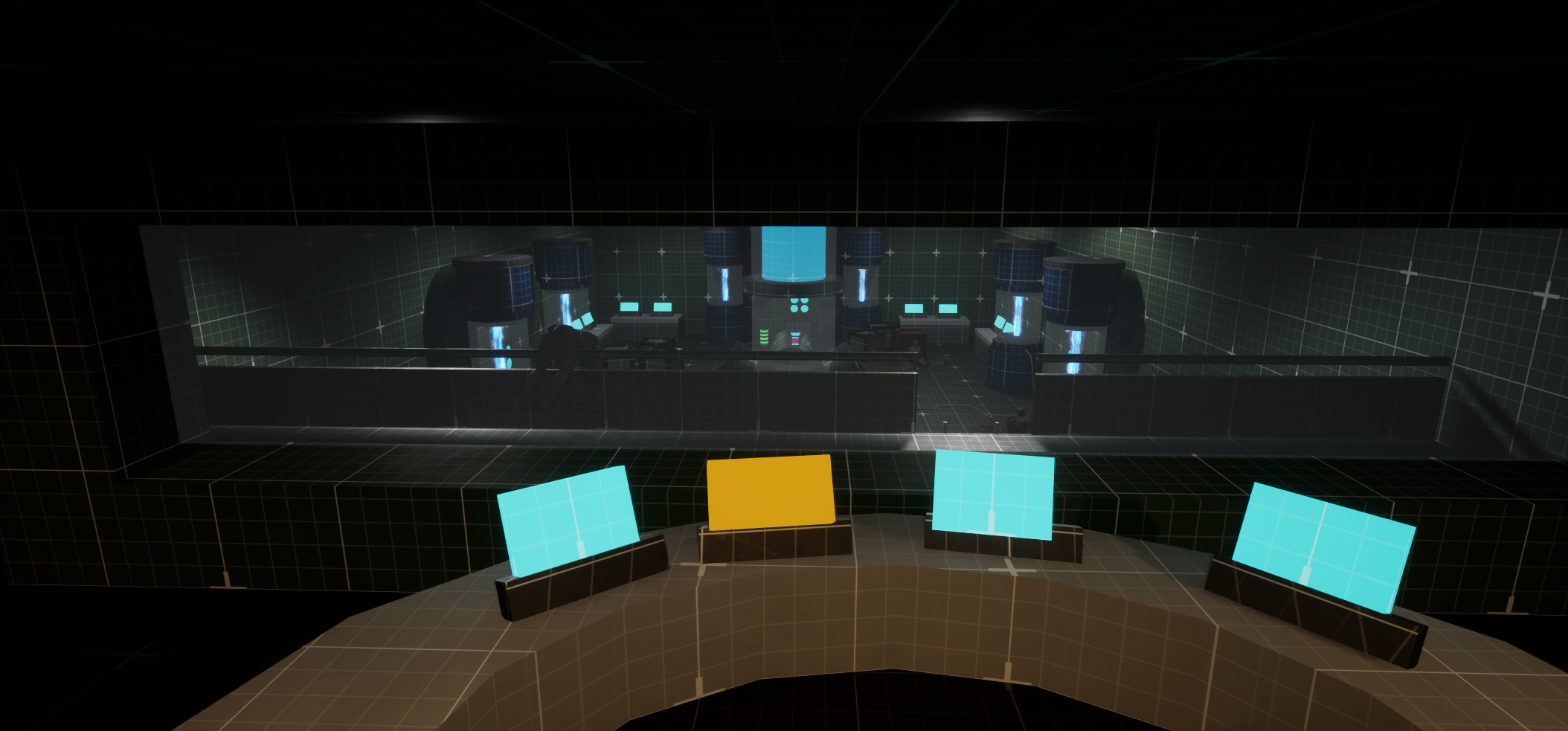
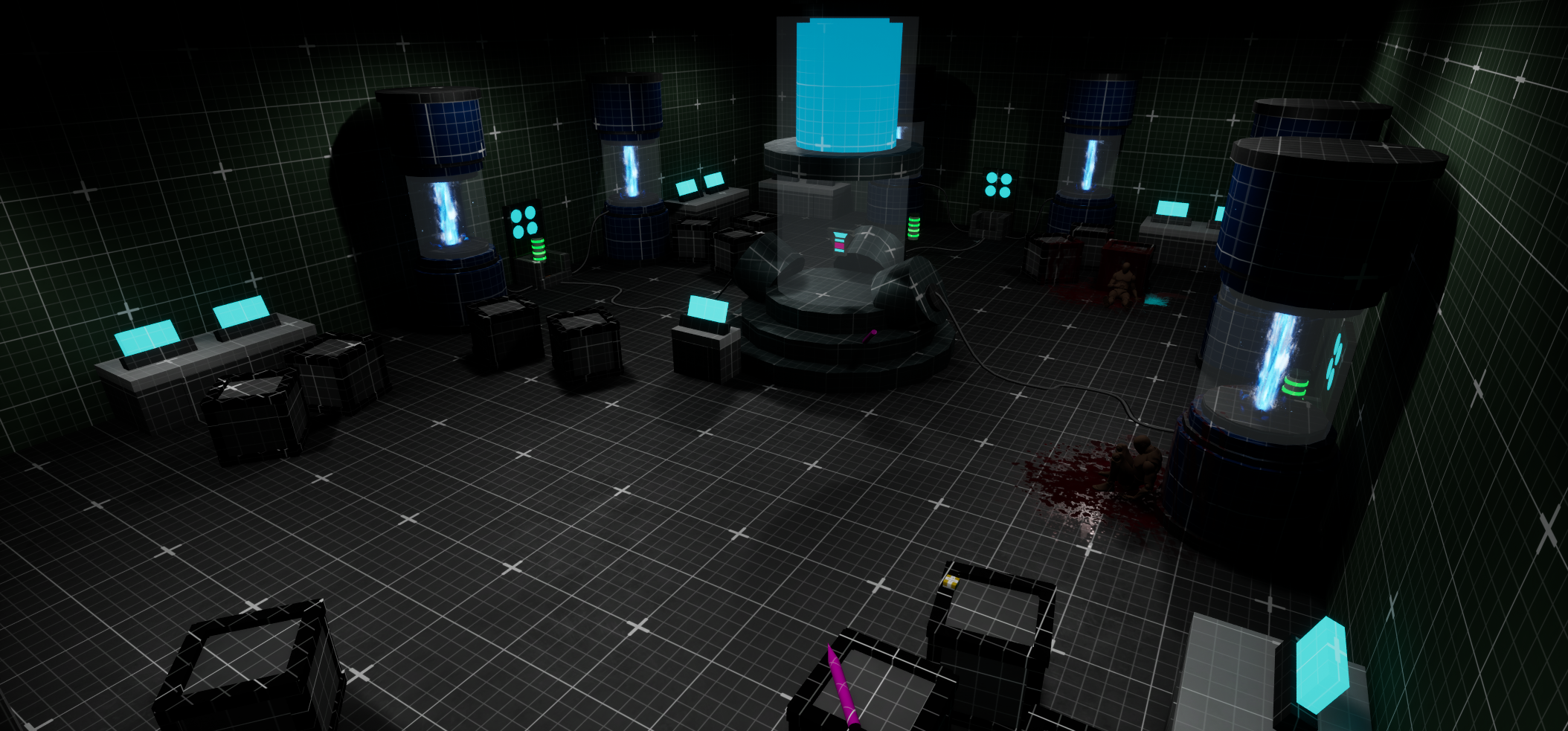
2d level Map
I created a telekinesis system where the player can pick up and throw certain environmental objected placed throughout the level.
I created a telekinesis system where the player can pick up and throw certain environmental objected placed throughout the level.
Pressure plate Blueprint
Design Process
I start with planning using a miro board. Here I write down my ideas and organize the level flow and story beats. I also include my 2d map and gather references for the areas and objects I plan to create and put in my level.
Step 1: Overview, Miro board, and references
Miro Board
Step 2: First 2D map and putting the ideas together
My next step was to hop into illustrator and start creating a 2d map of what I wanted the map for my level to look like. This is the original map that changed drastically as I created the level in engine. After running through different setting ideas of how I want the layout and flow of each area to connect from one to another and the tram route through the station I ended up deciding on this as my initial 2d map and lay out. While I concluded on this as a start I was thinking of “wow” and “scare” moments and how the player will use not just traditional combat but also environmental through the telekinesis system I made in each space.
Initial questions
How will this space feel to the player?
How can I combine telekinesis and traditional combat elements in these spaces?
Is there too much back tracking?
How can I keep the player on edge and scared?
Step 3: Metrics gym and modeling out props
Metrics gym
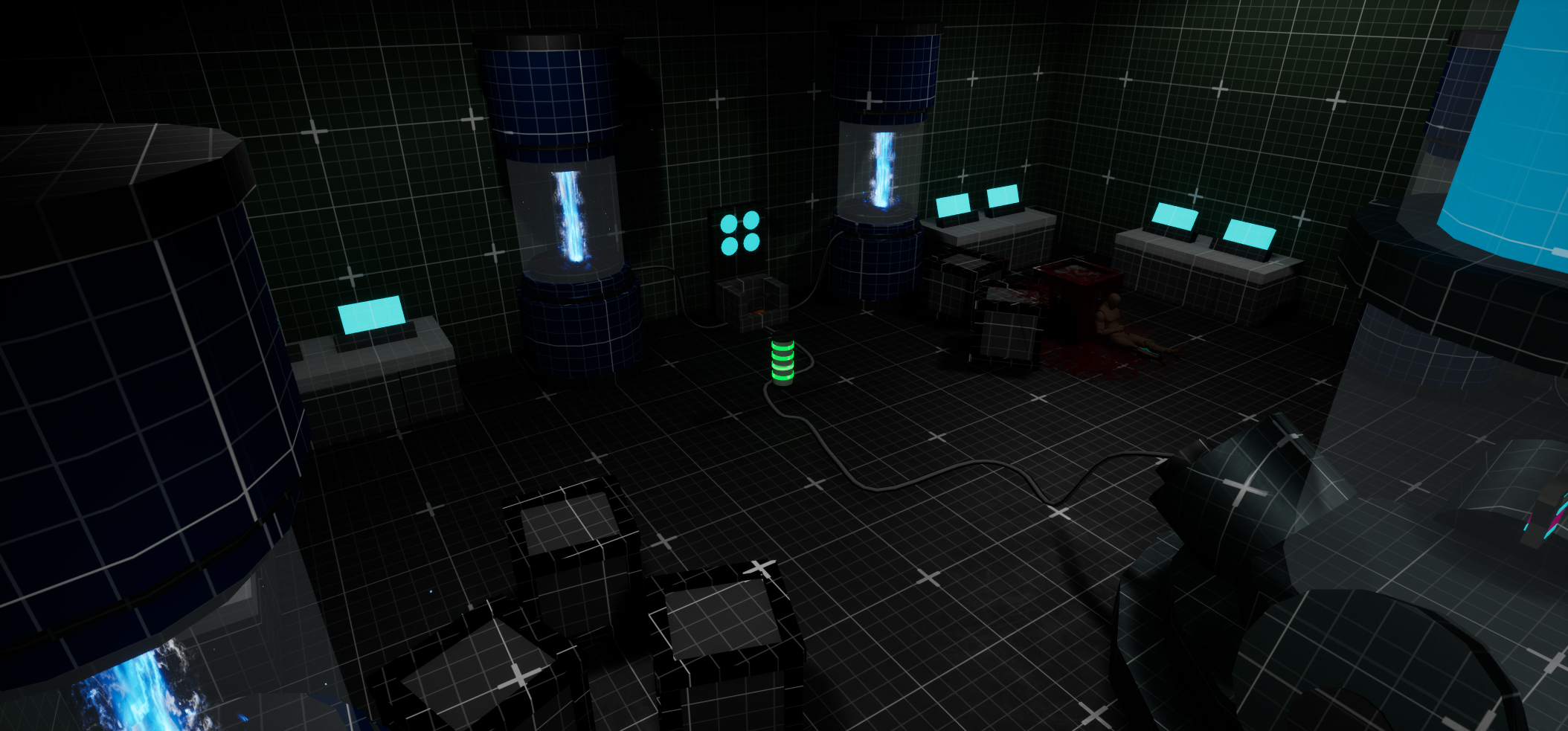
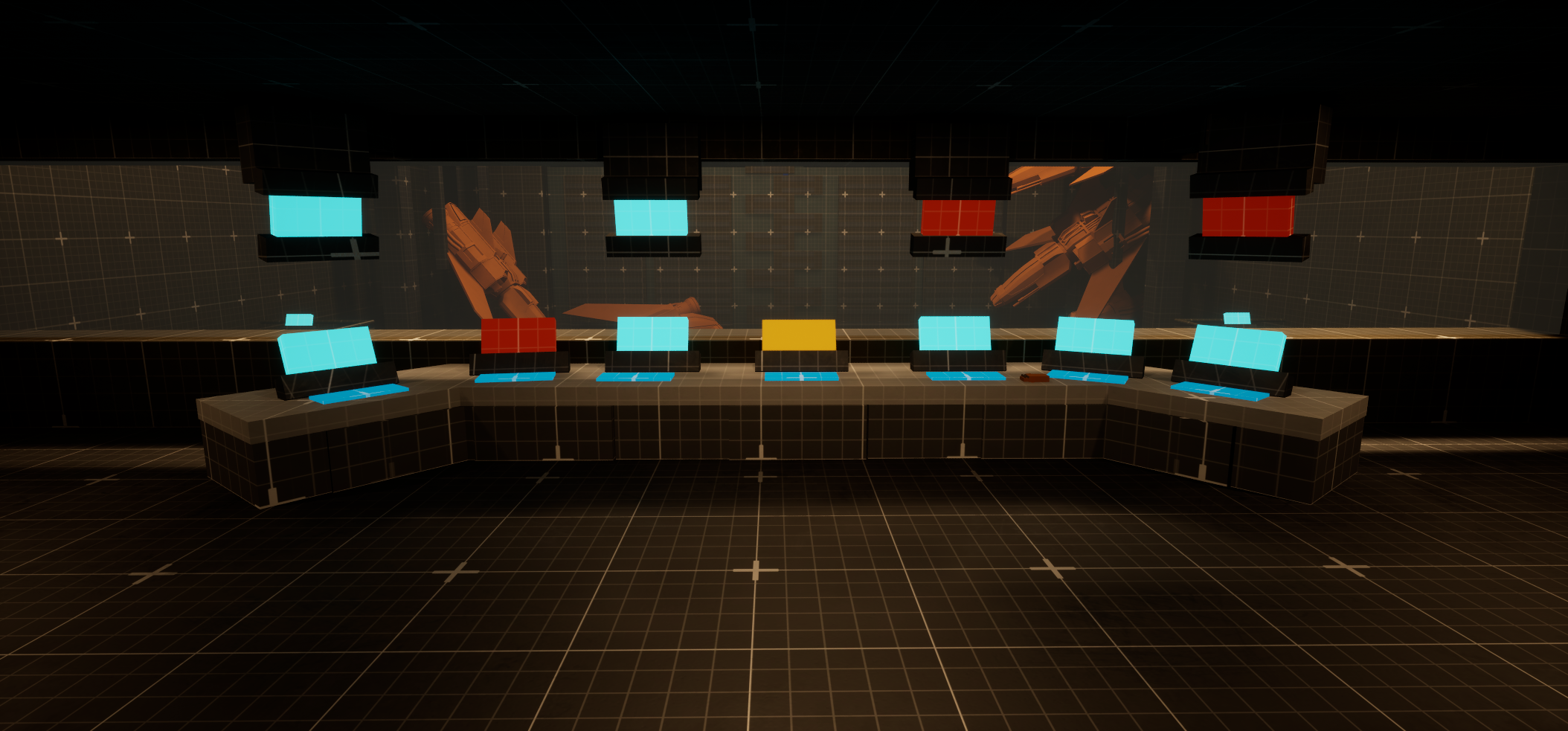
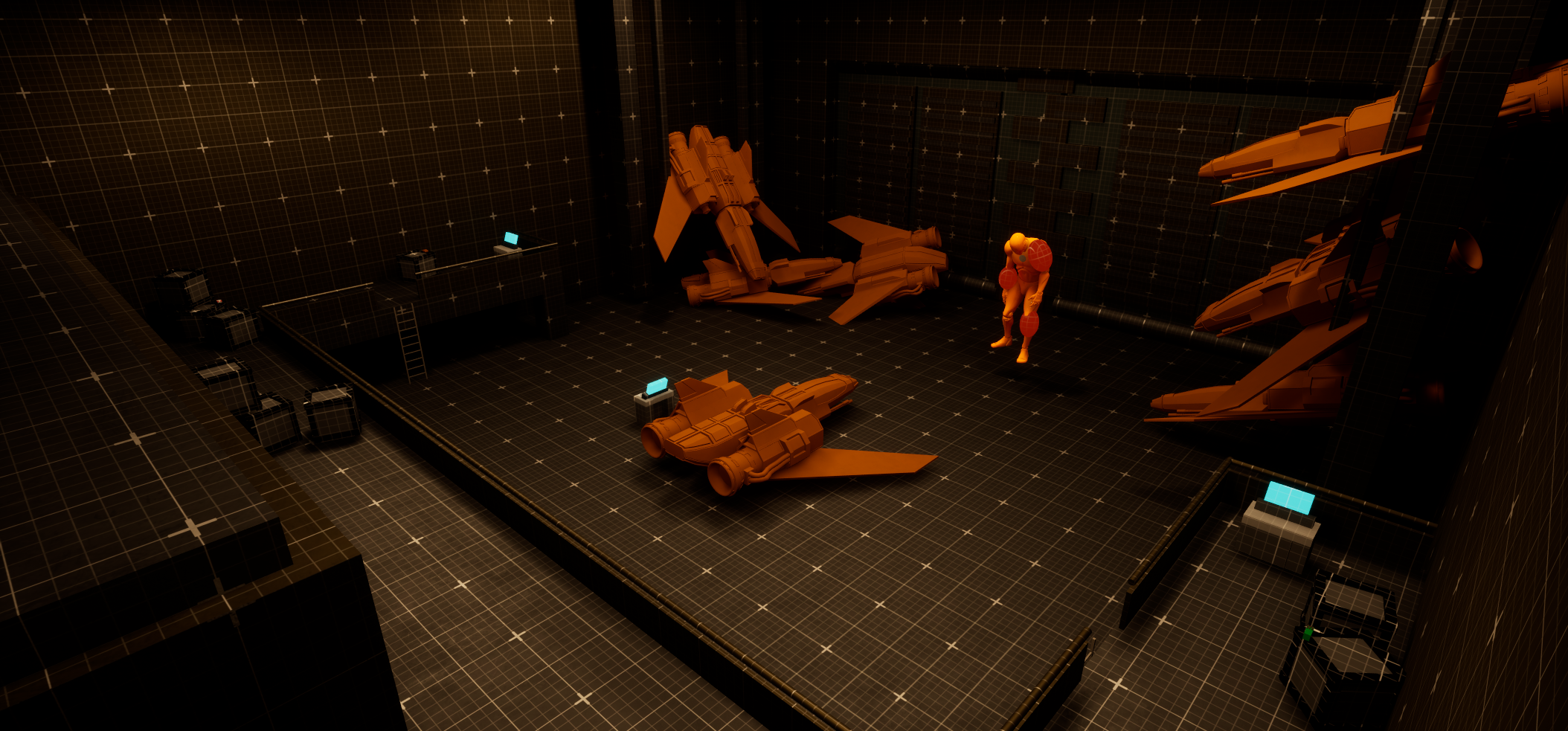
The metrics gym helped inform my level metrics through having a playground to test guns, height and width measurements, and combat. Using these areas I made helped with the flow of creating my level as I didnt have to test the height or width of certain objects/props or enemy health/ gun damage.
Shooting range to test guns.
Simple combat room to test enemies and weapons.
Height and width metrics
Modeled props
Next was modeling out all the props I planned to use for my level from big things like the tram to small things like desks and shelves.
All props modeled in Unreal Engine 5 modeling tool
Step 4: Creating the in house gameplay mechanics
Power System
I created a power system that uses a pressure plate and when a power core is placed on it a power cable will fill up with electricity and once its fully filled power on a given actor or script.
Able to be used to activate anything from doors, sequencers, enemy spawning, etc.
Power on and off event made via Blueprint interface
made it an array to be able to activate multiple things
Power System Blueprints
Pressure plate Blueprint
Power Cable Blueprint
Power Core Blueprint
Telekinesis System
Combat iteration
First iteration
Train gameplay iteration
First iteration
Train sections felt boring.
Created downtime.
Lost all form of movement and combat.
Became “waiting sections” rather than staying dynamic.
No way to force the player off the train.
Cover on the train served no purpose outside of set dressing the train cars.
Final iteration
Train sections are more exciting and dynamic.
Eliminated downtime.
Added enemies on the train for combat.
Added enemy platforms on the side of the mountain to shoot at the player for more high tense moments.
Mountain enemies made cover on the train serve a purpose.
Laser gates made to force the player off the train.
I created a telekinesis system where the player can pick up and throw certain environmental objects placed throughout the level.
Able to be used to be able to pick up the power cores
Able to be thrown at enemies to deal damage by impaling them with the object
Creates different combat choices allowing the player to utilize more than just the weapons provided
Telekinesis System Blueprints
Telekinesis Blueprint
Damage to enemy Blueprint
Lessons Learned
Key Take aways
Enemy behavior: One thing I had to revisit was the enemy encounters, as I hadn’t properly created clear, readable multiple paths for them. Since the encounters were smaller and contained to a single area, the placement of enemies, the types of enemies used, and the positioning of cover and mechanics that offer different approaches were all important in shaping these spaces. This created a good challenge when designing each encounter—ensuring there were multiple viable paths and consistently evaluating and playtesting everything I created.
Flow and playability: Throughout the development of my level, I conducted playtests, and through this process, I discovered that certain areas of the map fell a bit short, were a bit tough, or more confusing than I had initially expected. Areas that initially felt good and fluid to me were often not designed or communicated in a way that the player could easily understand. Examples of these areas are outlined earlier on this page. This experience strengthened my process of iteration, playtesting, and evaluation, making it a more ingrained part of my workflow when creating levels.
Combat Encounters: One thing I learned was how to better approach combat encounter's and making three different lanes for the player. In my development my encounters came out too small and didn’t leave room to include movement for the player or the enemies. Through iteration and playtesting I created better suited encounters that allowed for the combination of advanced movement, combat, and different approaches.
Skills honed
UE5 Blueprints: For this level, I developed a moving train that uses a spline, which takes in an array of meshes and moves them along the spline via a timeline. I also created and connected multiple blueprints to reset the train to its designated position and rotation whenever a player passes through a checkpoint. When the player dies and returns to the last checkpoint, the train will reset to its saved position and rotation and continue moving from there.
UE5 modeling tools: Coming into this I had some experience with using the UE5 modeling tools, but it was not to the extent of making something as big and complexed (at a primitive level for a blockout) as train cars. I became more comfortable and efficient at blocking out meshes at different scales and details, from the train cars, stairs, boxes, rocks, and tables.