LAZARUS STATION
SOLO PROJECT UNREAL ENGINE 5 BLOCKOUT
LAZARUS STATION
RESPONSIBILITIES:
Designed layouts of the entire map.
Modeled and built the map in UE5, including small scale props, architecture details and pieces, and tram.
Implemented AI, gameplay, asset packs for gameplay. Designed telekinesis system, objectives and modified enemies for different types and for mini boss/boss.
SOFTWARE USED: UE5, Blueprints, Block mesh, UE5 modeling tool, Illustrator, Splines.
ASSET PACKS USED: Advanced Survival Horror, 4k blood pack, nebula sky box, dying breath death poses. This can all be found on FAB
Design Intentions:
Design a intense an immersive survival horror experience.
Design spaces that utilize both environmental combat and traditional combat capabilities.
Improve scripting skills by modifying existing scripts to work with new ones and creating new scripts.
Build a complete level with a start, middle, and end.
Create combat encounters that provide room for different approaches to use the weapons and tools the player is provided with.
TRAILER
FULL WALKTHROUGH
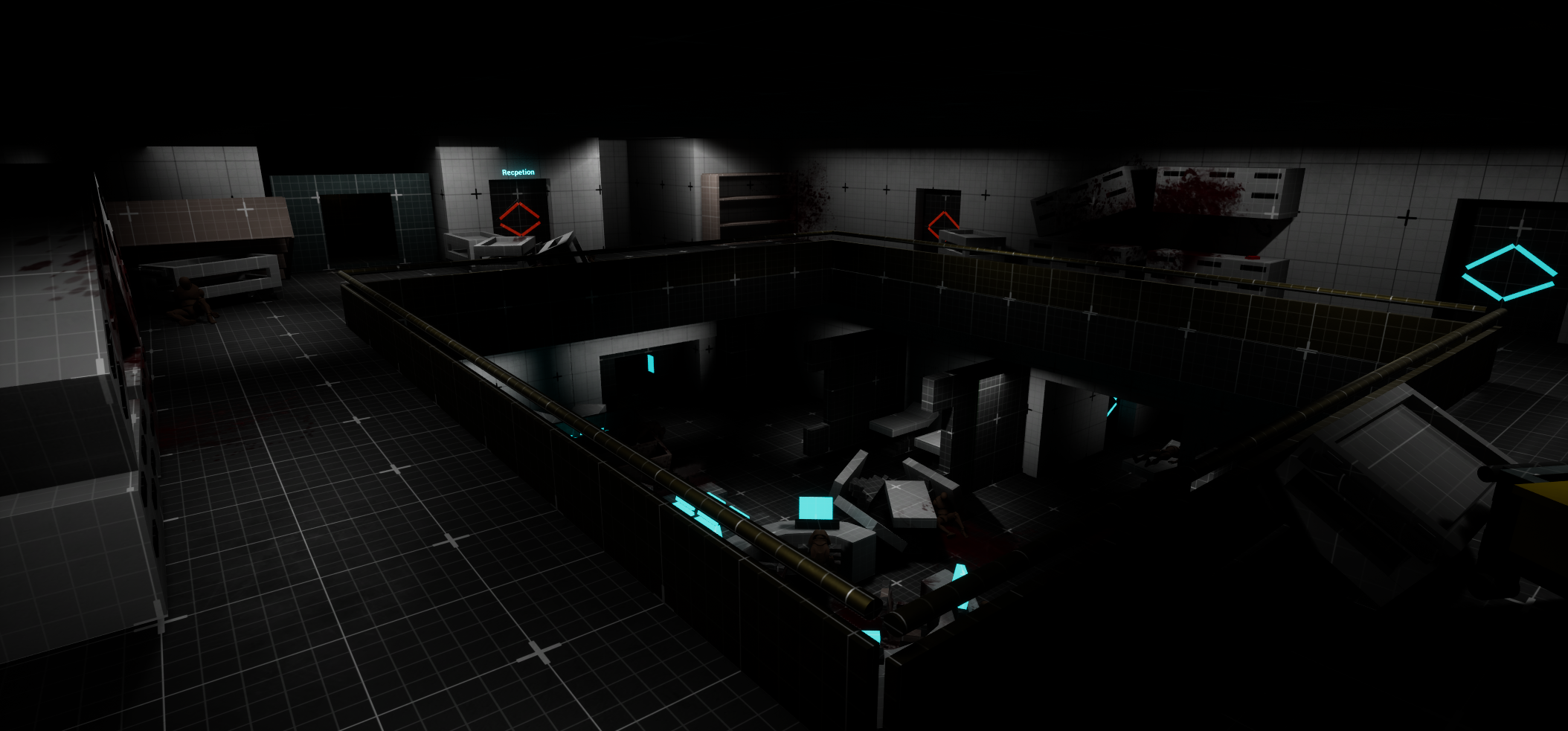
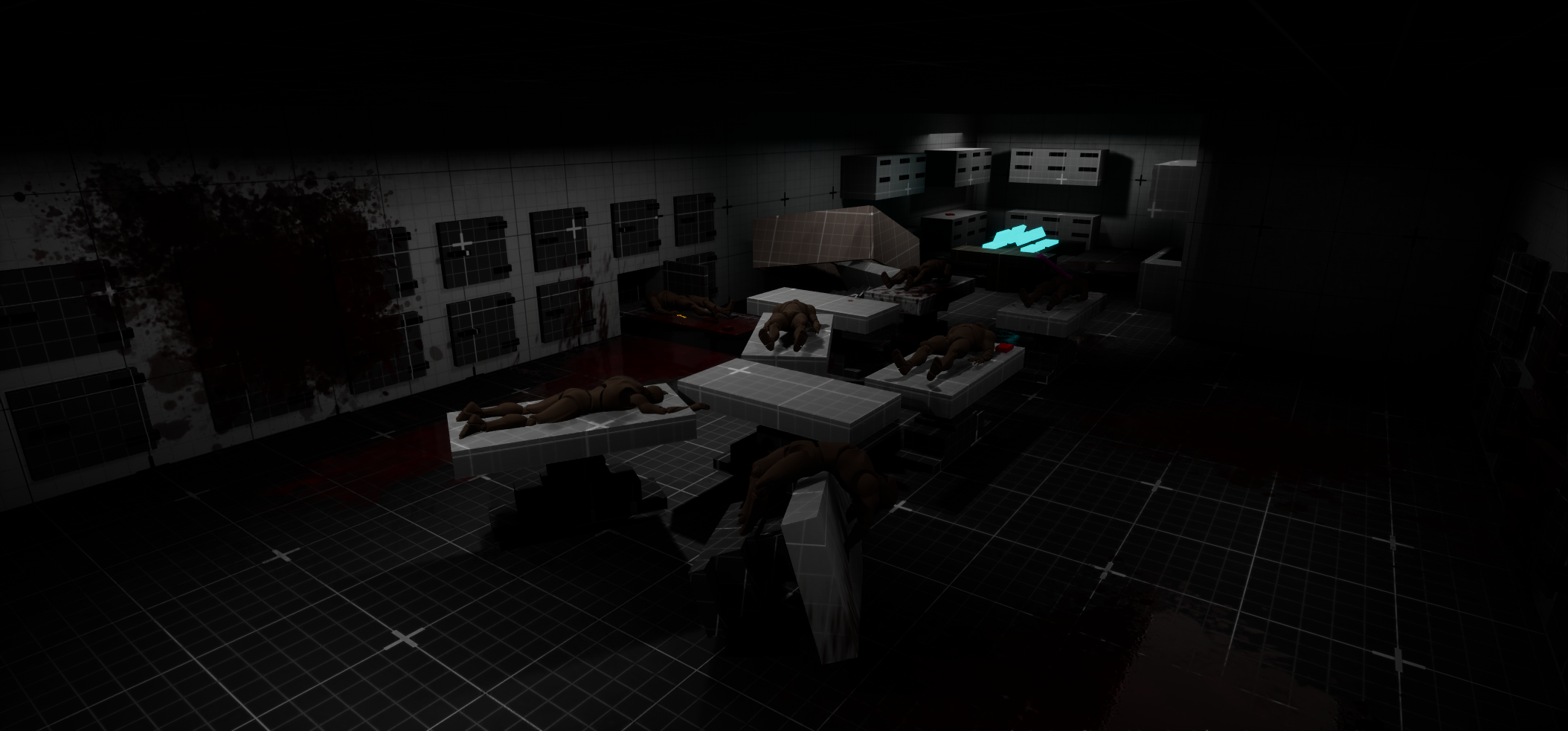
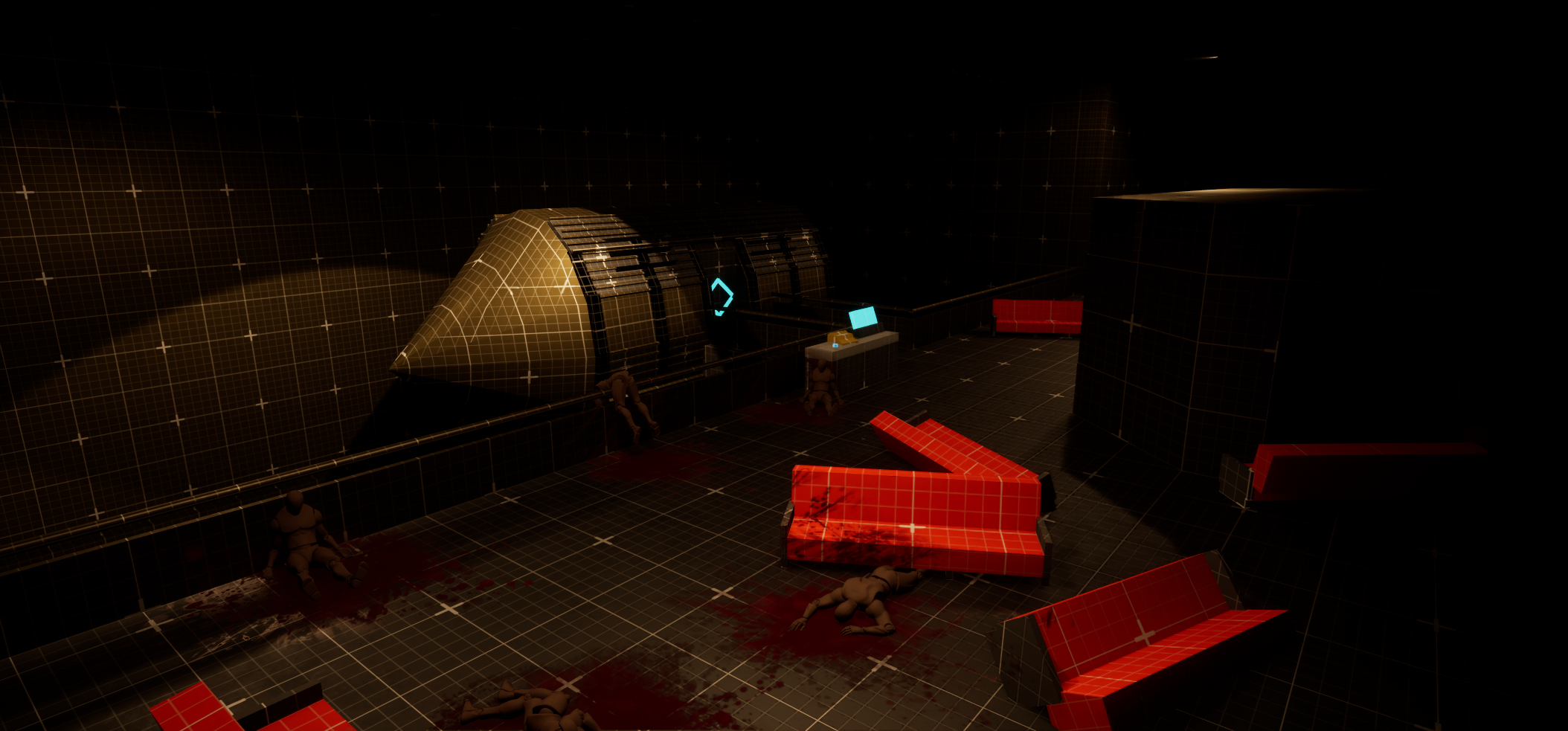
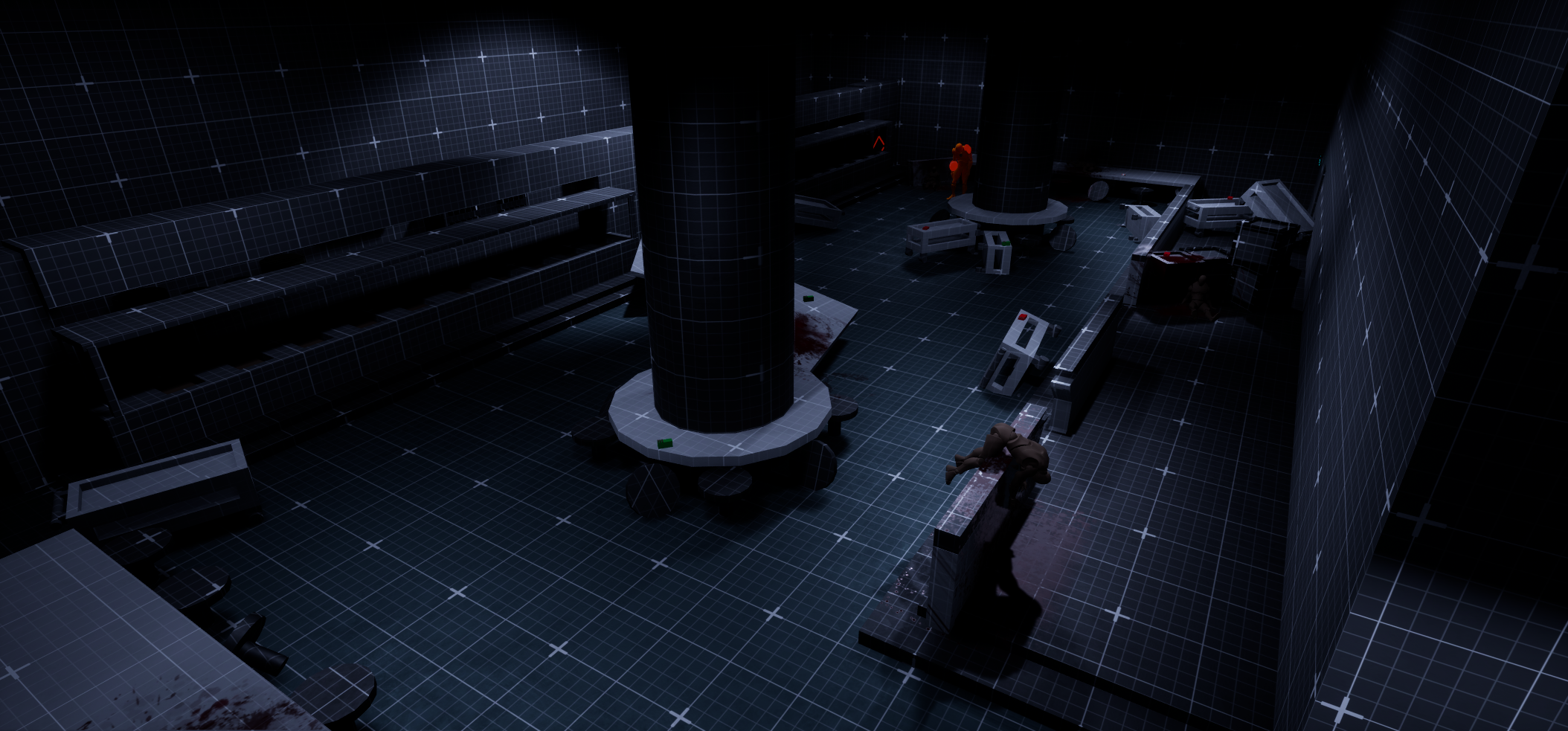
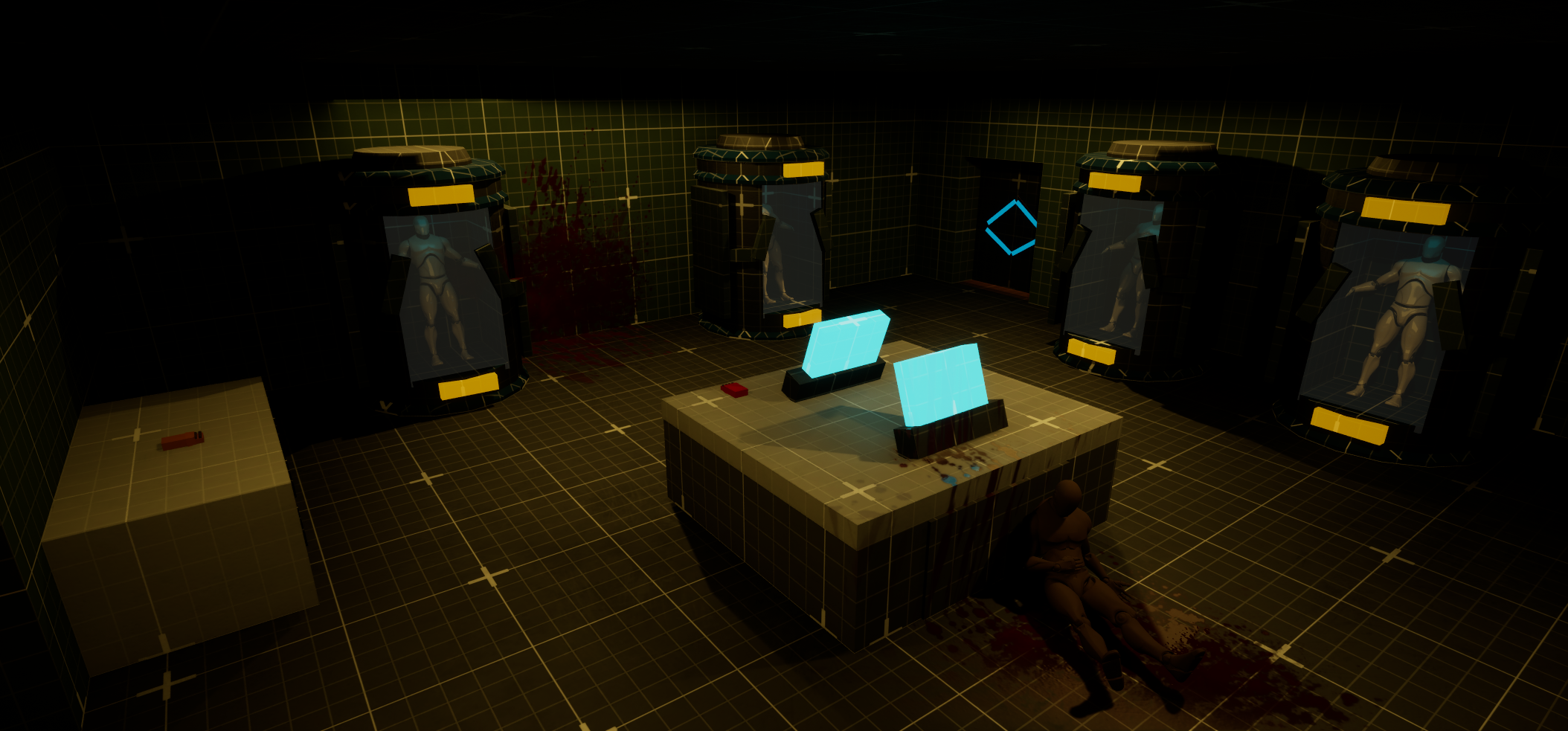
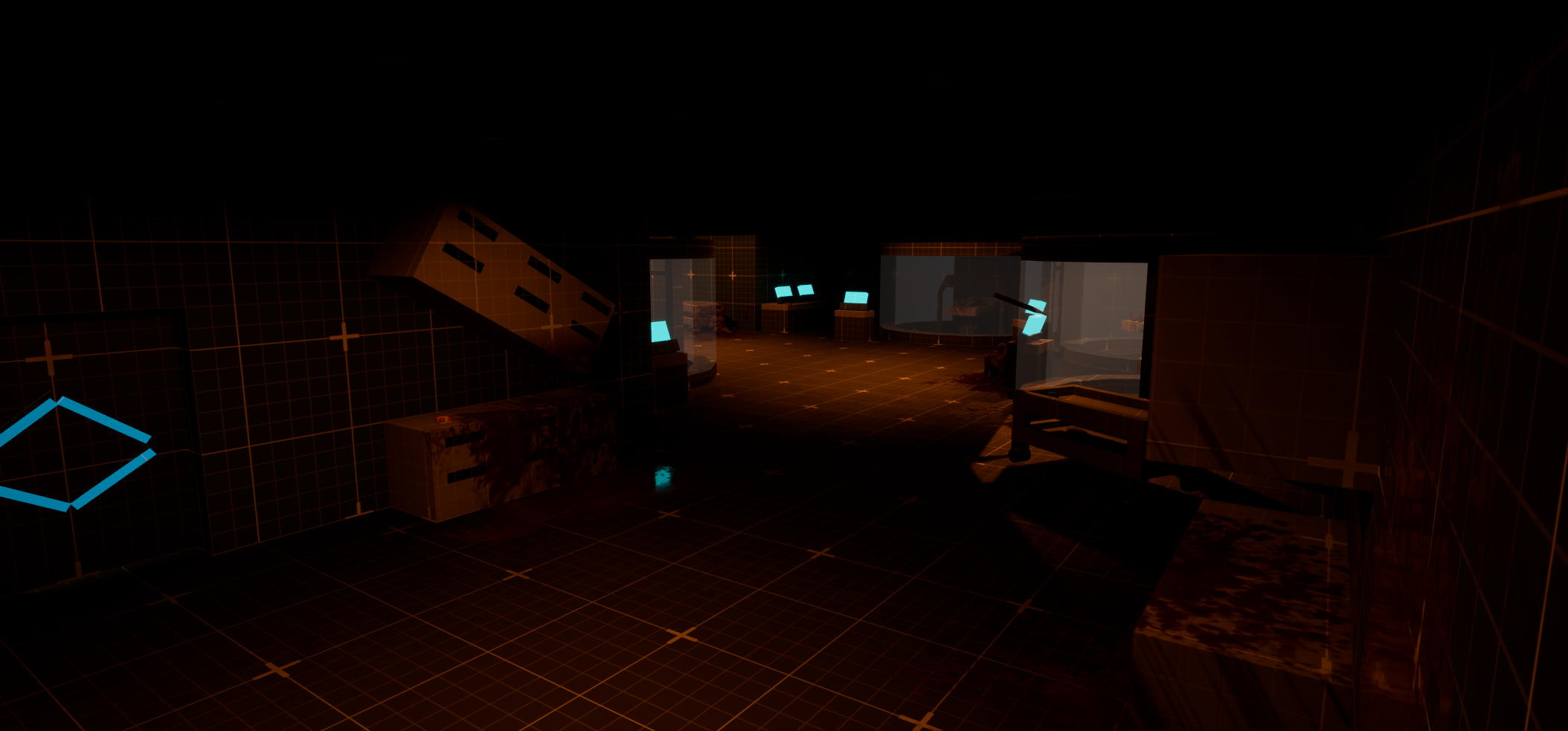
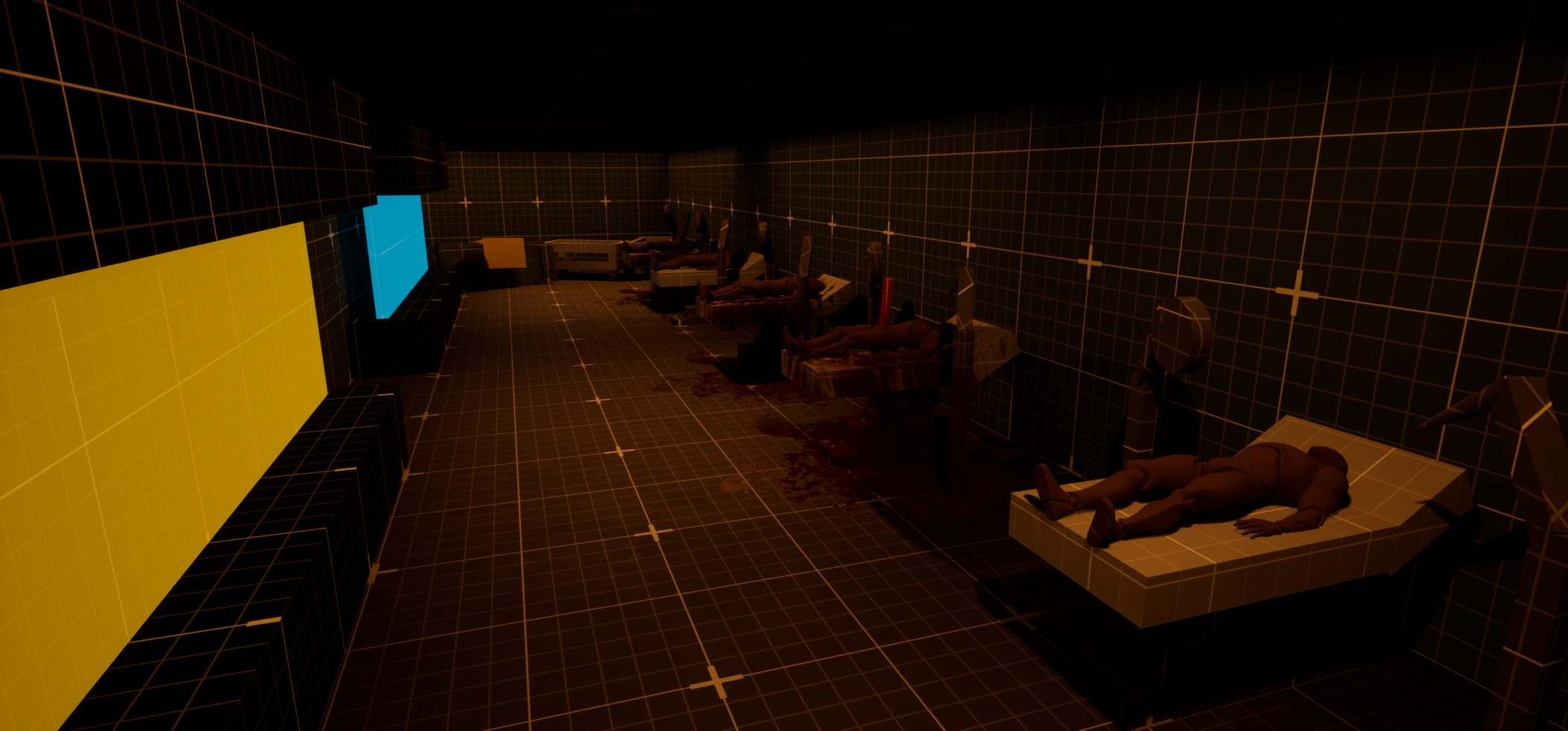
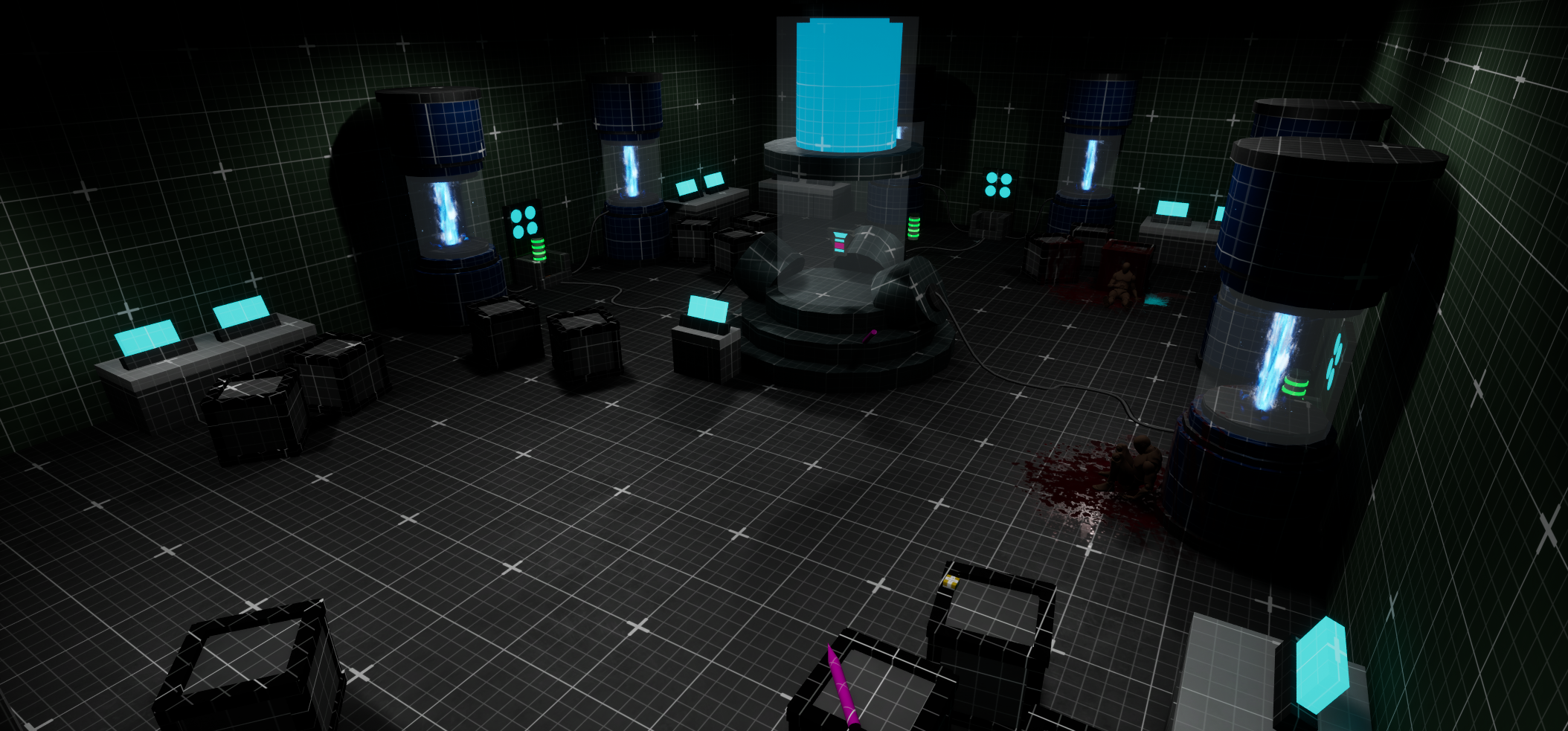
2D LEVEL MAP
MIRO BOARD
I start with planning using a Miro board. Here I write down my ideas and organize the level flow and story beats. I also include my 2d map and gather references for the areas and objects I plan to create and put in my level.
FIRST 2D MAP
Initial questions
How will this space feel to the player?
How can I combine telekinesis and traditional combat elements in these spaces?
Is there too much back tracking?
How can I keep the player on edge and scared?
METRICS GYM
I created a metric gym to help with scale and functionality
Shooting range to test guns.
Simple combat room to test enemies and weapons.
Height and width metrics
COMBAT
Traditional combat vs Traditional + Environmental Combat
Traditional Gun only combat
Simple gun play like traditional survival horrors.
Player only has to manage and think about the resources they have on hand.
Limits gameplay and combat interactions to just guns.
Analyzing the environment isn’t as encouraged or crucial to combat.
Traditional Gun and Environmental throwables combat
More complex combat with not just gun play but also using objects in the environment.
Player not only has to manage and think about the resources they have on hand but now also those provided by the environment.
Adds another layer to the resource management mechanic of survival horrors.
Makes analyzing the environment more crucial when in combat.
AREA BREAKDOWNS
Mini Boss Arena
Multiple figure 8 loops allow for the player to move through the encounter in various paths.
Negative space to allow the place to break line of sight and gain distance on the boss and creates the figure 8 loops.
Item pick ups placed throughout the room to allow the player to regain or obtain more resources as the fight the mini boss.
Medical
Negative space helps block off paths in what is a big room to gate and rope around the player through the space.
Leading lines are created by the negative space to guide the player through the room.
Light source in the back of the room along with the leading lines helps guide the players eyes to the where the need to end up.
Item pick up to allow the player to throw it in combat.
ITERATIONS
Throughout designing my level I made frequent iterations to multiple spaces. The overall issues I ran into with these spaces was that they felt roughly the same, lacked real purpose and/or functionality.
Area Cuts and flow iteration
First Iteration
Security + Central Control
Had solid, unique, and memorable gameplay spaces but entire area hurt flow and pacing.
Cutscene was fitting for the story and had unique spaces but ultimately didn’t blend well with the created atmosphere.
While different was still a lock and key encounter to unlock tram just like the medical section before hand.
Tend to make the player feel disconnected and slightly exhausted with the feeling of constantly being blocked at every turn.
Full walk through of first isolated area iteration
Final Iteration
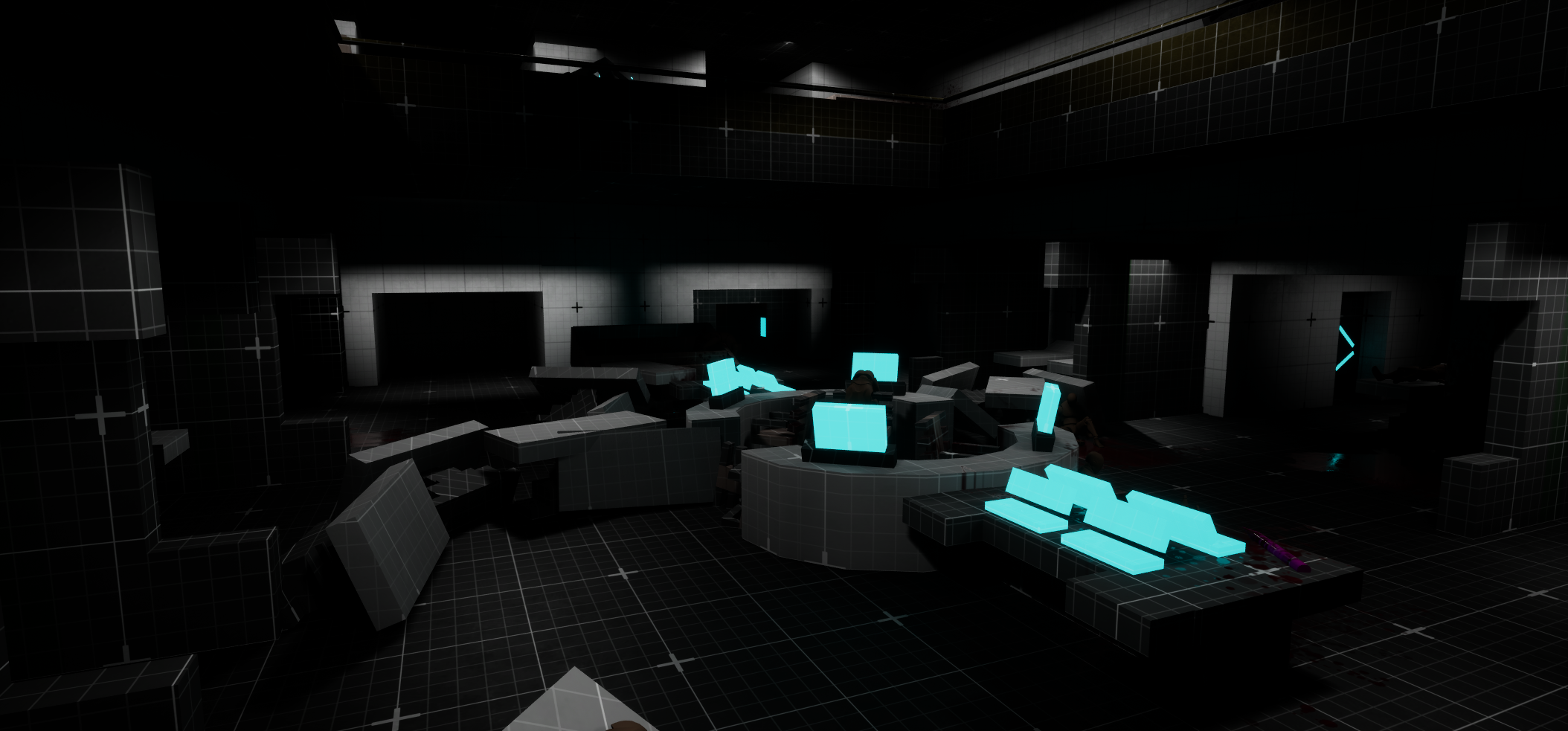
Only Central Control
Improved flow by eliminating a unneeded player block/gate and use of similar encounter.
Removed cutscene.
Survivor interaction created a sense of hope, humanity, and fleeting feeling that contrast from the rest of the level.
Players felt less exhausted and being blocked by a same reason.
Full walk through of final isolated area iteration
First Iteration
Medical Wing
Was a generic room that Lacked function or purpose.
Felt out of place and didn’t read well and created uncertainty of what it really was.
Final Iteration
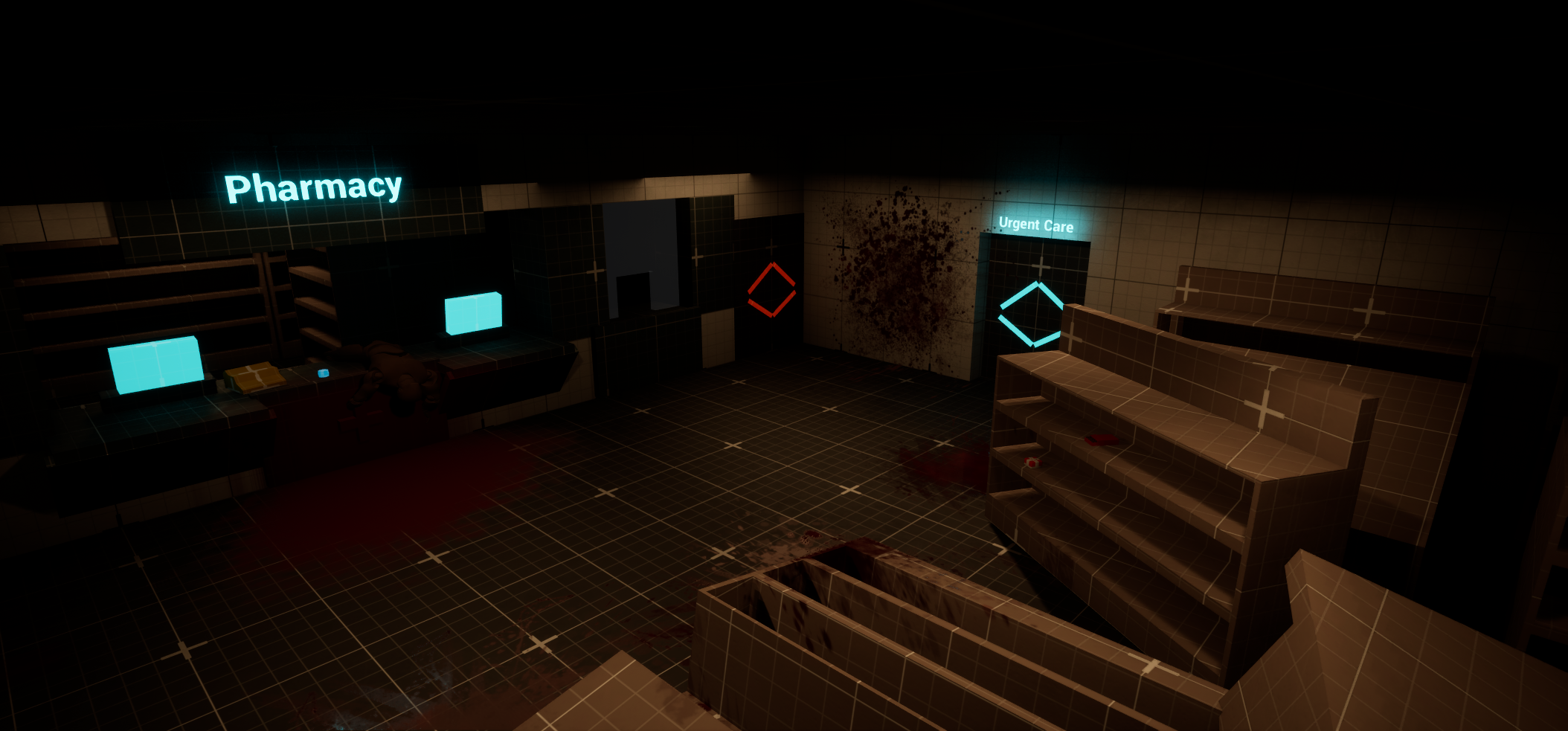
Recreated the room to become a Pharmacy.
Was more readable to players and didn’t feel out of place.
Central Control Iterations
First Iteration
Was a generic hallway that Lacked function or purpose.
Felt out of place for being next to a cafeteria due to being a high traffic area.
Didn’t read well and created uncertainty of what it really was.
Final Iteration
Removed hallway and expanded cafeteria and made it more readable with a added kitchen rather just a food bar.
Made the space more impactful changing it to house a mini boss fight.
Redesign implemented two different figure eight loops and more impactful negative space for the player to move around during the mini boss fight.
Second half of Central Control iterations
First Iteration
Was another generic hallway that lacked function or purpose.
Felt out of place completely.
Didn’t read well and created uncertainty of what it really was.
Final Iteration
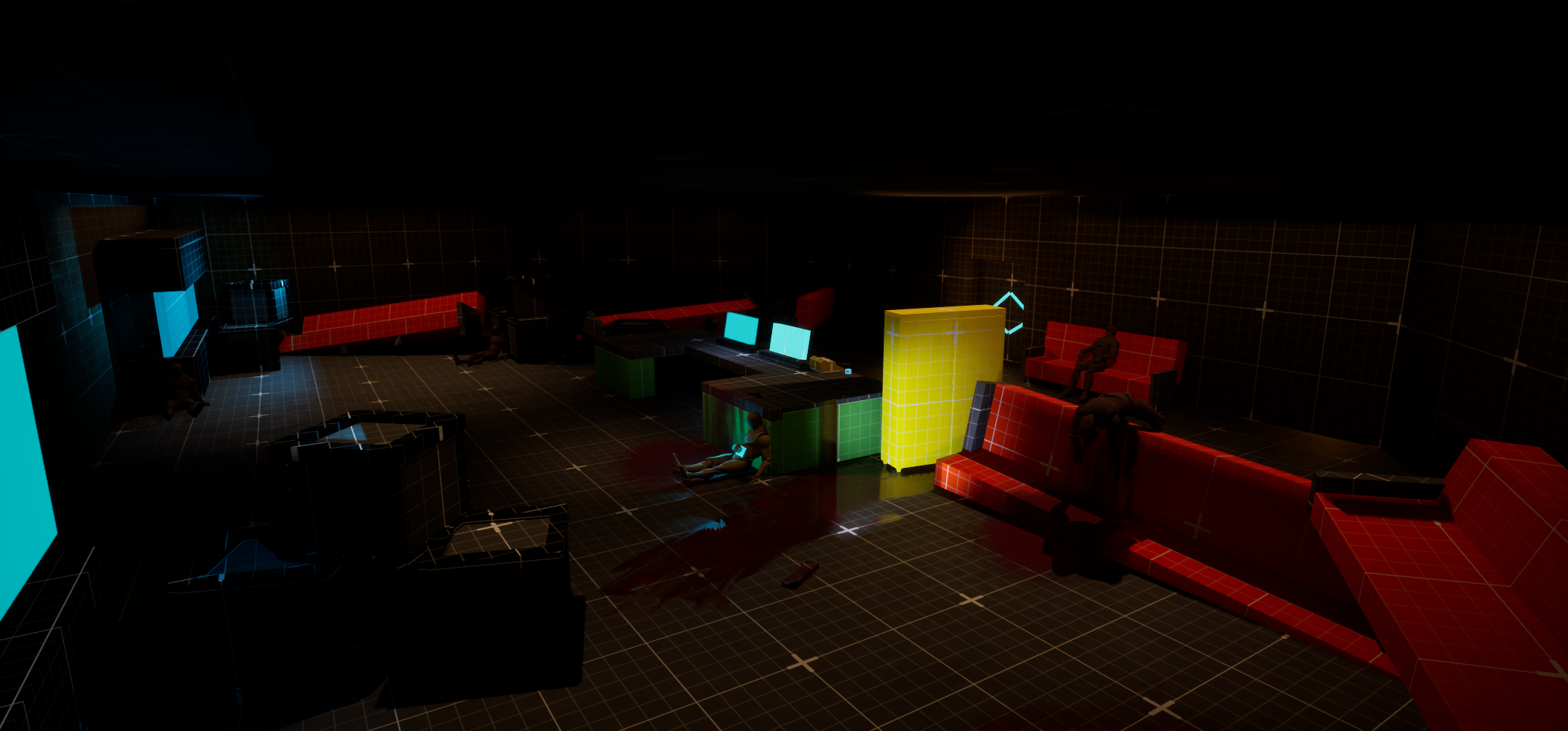
Redesigned space to become a crew quarters.
Added a general path as just the crew quarters wouldn’t make sense when fitting in the whole station.
Made the player move between the general path and going through the crew quarters making it more impactful and flow better.
BLUEPRINTS
I created a power system that uses a pressure plate and when a power core is placed on it a power cable will fill up with electricity and once its fully filled power on a given actor or script. Able to be used to activate anything from doors, sequencers, enemy spawning, etc.
Power System
Pressure plate Blueprint
Power Cable Blueprint
Power Core Blueprint
Telekinesis System
Able to be used to be able to pick up the power cores and solve puzzles.
Able to pick up objects to be thrown at enemies to deal damage by impaling them.
Creates different combat choices allowing the player to utilize more than just the weapons provided.
Telekinesis Blueprint
Damage to enemy Blueprint
Mini Boss
Has two spores that act as crit points the player can pop.
Popped spores will lower the mini boss’s health.
When both spores are popped the player will have to continue fighting to finish off the mini boss’s remaining health.
Mini boss blueprint
Final Boss
Has three spores that act as major crit points the player can pop to lower Boss’s health.
When all spores are popped the Boss will be defeated and die.
If the player doesn’t land spore shots their damage to the boss will still lower its overall health but popping all three spores is how the player needs to defeat the Boss.
Final boss blueprint